

Aquariums as Architectural Features: Integrating Living Displays into Interior Design
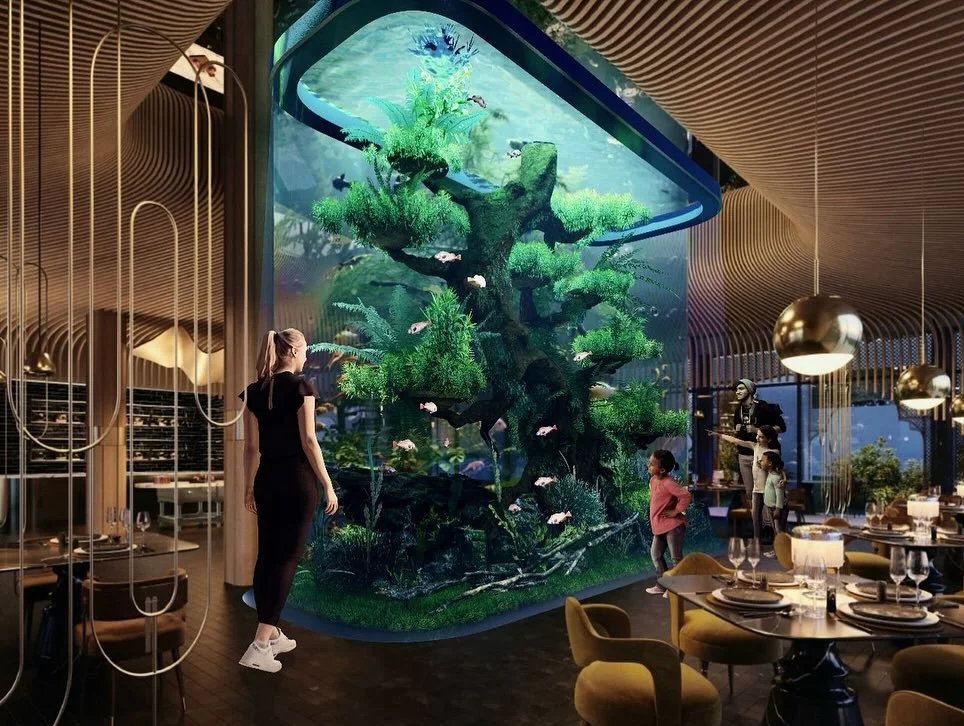
Aquariums have evolved far beyond standalone glass tanks placed against a wall. In modern design, they are increasingly treated as architectural elements, integrated features that shape how a space is experienced.
From luxury residences to hotel lobbies and corporate environments, aquariums are now designed as part of the structure itself. They function not only as visual focal points but also as living installations that bring movement, light, and natural elements into built environments.
When approached correctly, aquariums become an extension of architecture, enhancing spatial flow, influencing mood, and creating memorable experiences.
The Role of Aquariums in Modern Architecture
In contemporary design, there is a growing emphasis on creating spaces that feel connected to nature. This concept, often referred to as biophilic design, focuses on integrating natural elements into built environments to improve wellbeing and user experience.
Aquariums naturally align with this approach.
They introduce:
movement through water and marine life
dynamic lighting and reflections
organic textures and forms
calming visual experiences
Unlike static design elements, aquariums continuously evolve, making them one of the most engaging features within a space.
Types of Architectural Aquarium Integrations
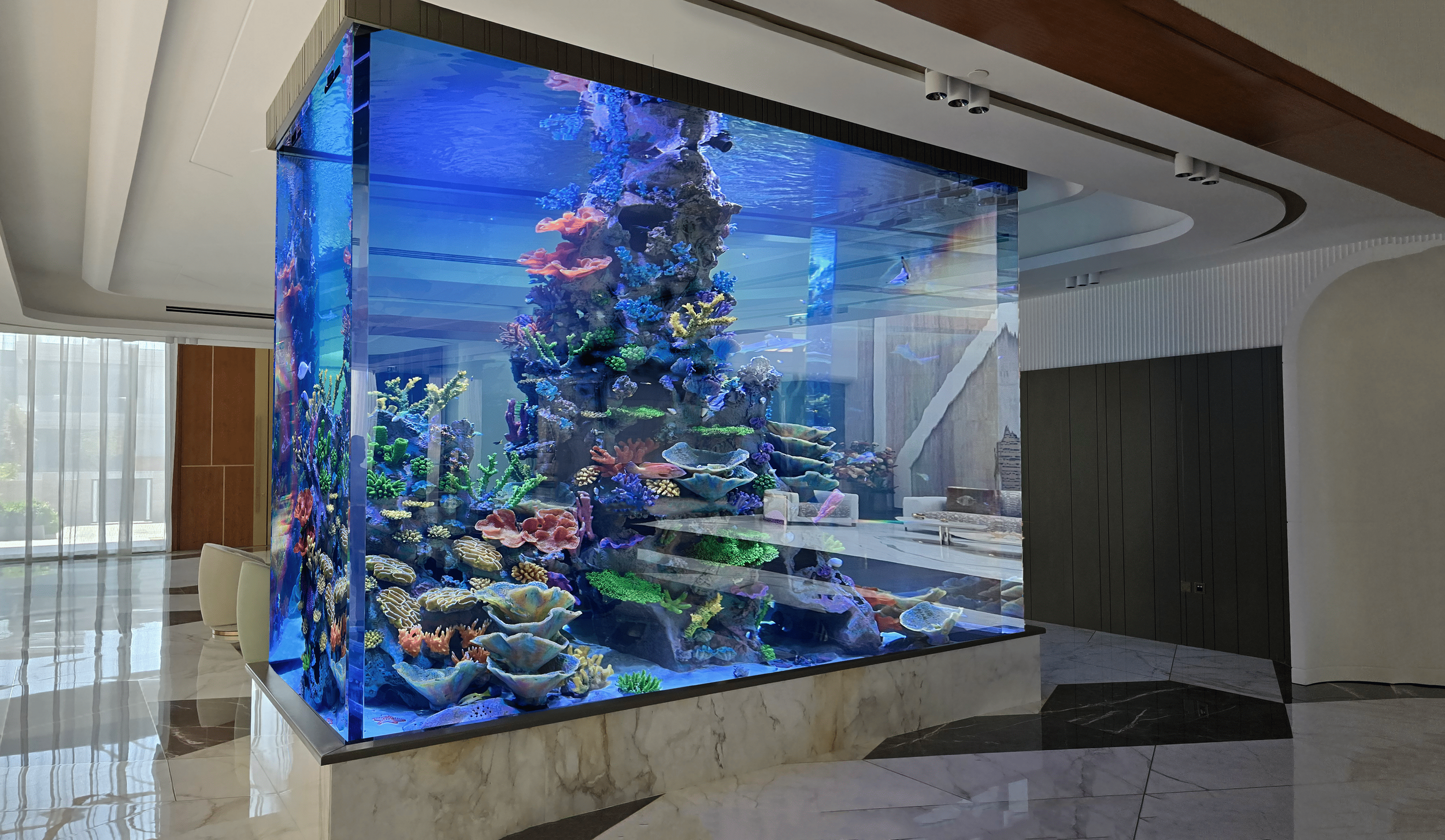
Custom aquariums can be integrated into architecture in a variety of ways, depending on the spatial layout and design intent.
Wall-Integrated Aquariums
Wall-integrated aquariums are among the most common architectural applications. These installations are built directly into walls, creating a seamless visual connection between spaces.
They are often used as:
room dividers
feature walls in living areas
focal points in offices or reception spaces
When designed properly, the aquarium appears as a natural extension of the wall rather than an added object.
Room Divider Aquariums
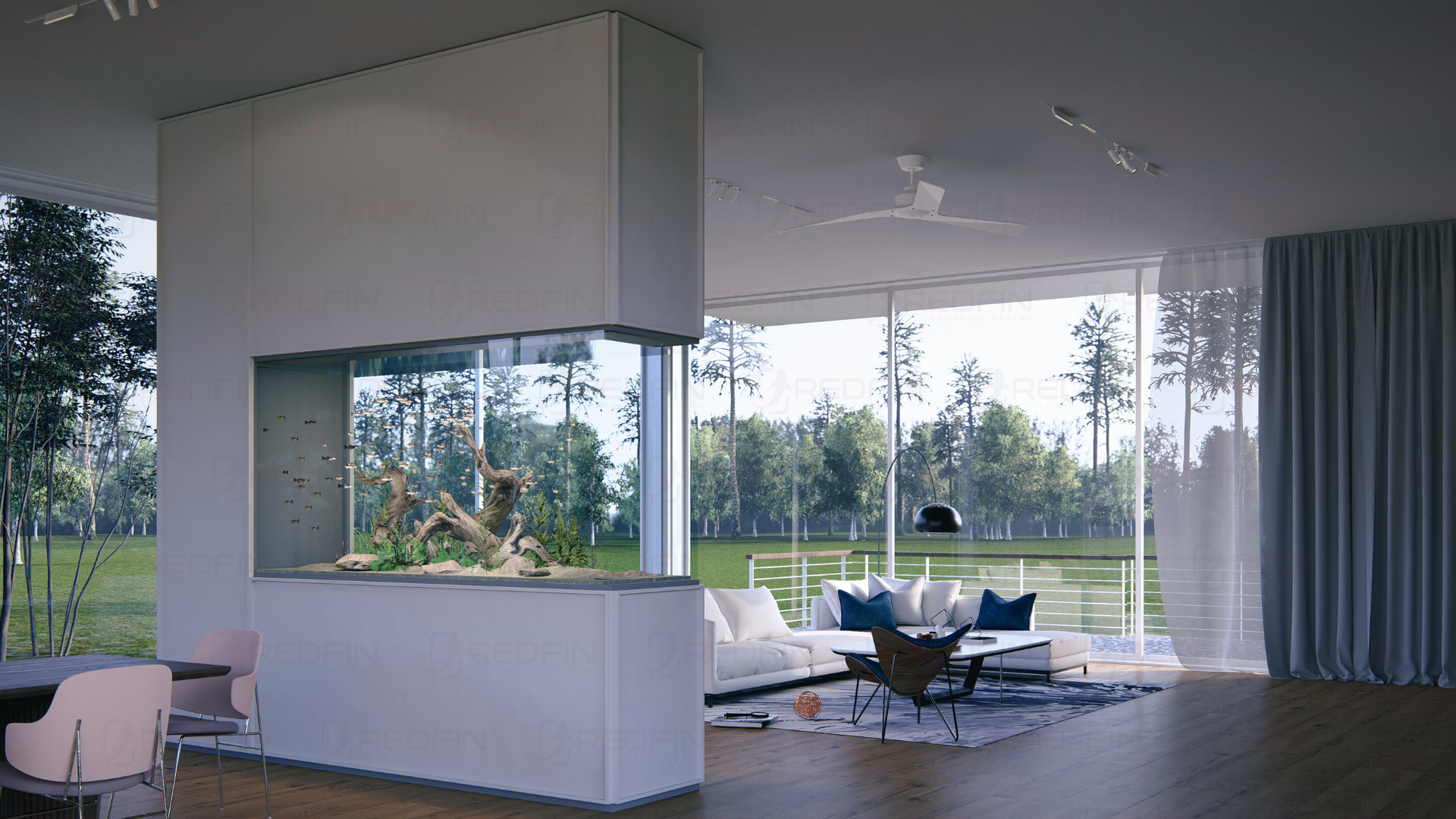
Room divider aquariums serve both functional and aesthetic purposes.
They define spaces while maintaining openness and visibility. This makes them particularly effective in open-plan environments such as:
luxury residences
hotel lounges
office interiors
Because they are visible from multiple sides, these aquariums require careful planning of aquascaping (creating rock and wood structures inside the tank) and lighting.
Cylindrical and Feature Aquariums
Cylindrical aquariums are often used as statement pieces in large spaces.
These vertical installations create a strong visual presence and can be viewed from multiple angles, making them ideal for:
hotel atriums
shopping centers
corporate headquarters
Their geometry also influences how people move through and interact with the space.
Floor and Walk-Over Aquariums
Floor-integrated aquariums create unique interactive experiences by allowing people to walk above the water.
These installations require advanced structural engineering and careful material selection to ensure safety and durability.
They are often used in high-end residential or experiential commercial projects.
Designing Aquariums as Part of the Structure
Integrating an aquarium into architecture requires coordination between multiple disciplines. Unlike standalone aquariums, architectural installations must be considered during the early design phase.
Structural Considerations
Aquariums are heavy systems. Water weighs approximately one kilogram per liter, meaning even mid-sized installations can weigh several tons.
Structural planning must account for:
floor load capacity
support structures
weight distribution
integration with building frameworks
Failing to address these factors early can limit design possibilities later.
Life Support System Integration
Every aquarium requires a Life Support System (LSS) to maintain water quality. In architectural installations, these systems are typically hidden within:
service rooms
cabinetry
adjacent technical spaces
Designing space for these systems is essential to maintain both functionality and aesthetics.
Maintenance Access
Maintenance is one of the most overlooked aspects in architectural aquarium design. Technicians require safe and efficient access for:
cleaning
equipment servicing
water testing
livestock care
Well-designed systems include hidden access points that allow maintenance without disrupting the visual design.
Lighting and Visual Impact
Lighting plays a key role in how an aquarium interacts with its surroundings.
Carefully designed lighting can:
enhance colors and textures
create reflections and depth
change the atmosphere from day to night
In architectural applications, lighting is often integrated with the overall lighting scheme of the space to create a cohesive visual experience.
Aquariums as Experiential Design Elements
Aquariums do more than enhance aesthetics, they shape how people experience a space. In commercial environments, they can:
increase visitor engagement
encourage longer dwell time
create memorable interactions
In residential settings, they provide a calming and immersive focal point. This experiential quality makes aquariums particularly valuable in hospitality, retail, and high-end residential design.
Challenges in Architectural Aquarium Design
Despite their benefits, integrating aquariums into architecture presents several challenges.
These include:
coordinating with multiple design disciplines
ensuring structural safety
integrating complex life support systems
maintaining long-term performance
Addressing these challenges requires a collaborative approach between designers, engineers, and aquarium specialists.
The Role of Professional Aquarium Design
Architectural aquariums are highly specialized installations that require expertise across multiple fields.
Professional aquarium designers ensure that:
engineering requirements are met
ecosystems remain stable
systems operate efficiently
the design integrates seamlessly with architecture
Appropriate livestock is chosen for the aquarium
This combination of technical knowledge and design expertise is essential for delivering successful projects.
Conclusion
Aquariums are no longer standalone decorative elements. They have become integral components of modern architecture, shaping how spaces are designed and experienced.
By combining engineering, biology, and design, custom aquariums can transform interiors into dynamic environments that connect people with nature.
When integrated thoughtfully, aquariums become more than visual features, they become living architectural elements that enhance both the function and atmosphere of a space.
FAQ
Can aquariums be integrated into walls?
Yes. Custom aquariums can be built into walls, creating seamless feature installations that connect different spaces.
Are architectural aquariums safe?
Yes, when properly engineered. Structural support, material selection, and safety factors are carefully calculated to ensure long-term stability.
Do built-in aquariums require maintenance access?
Yes. Maintenance access is essential and must be planned during the design stage to allow for cleaning and system servicing.
How are filtration systems hidden in architectural aquariums?
Life Support Systems are typically installed in service rooms or concealed spaces to maintain a clean and minimal visual design of the aquarium display.
Are aquariums suitable for commercial spaces?
Yes. They are widely used in hotels, offices, and retail environments to enhance visitor experience and create unique visual features.