

Lighting Effects That Transform an Aquarium at Night
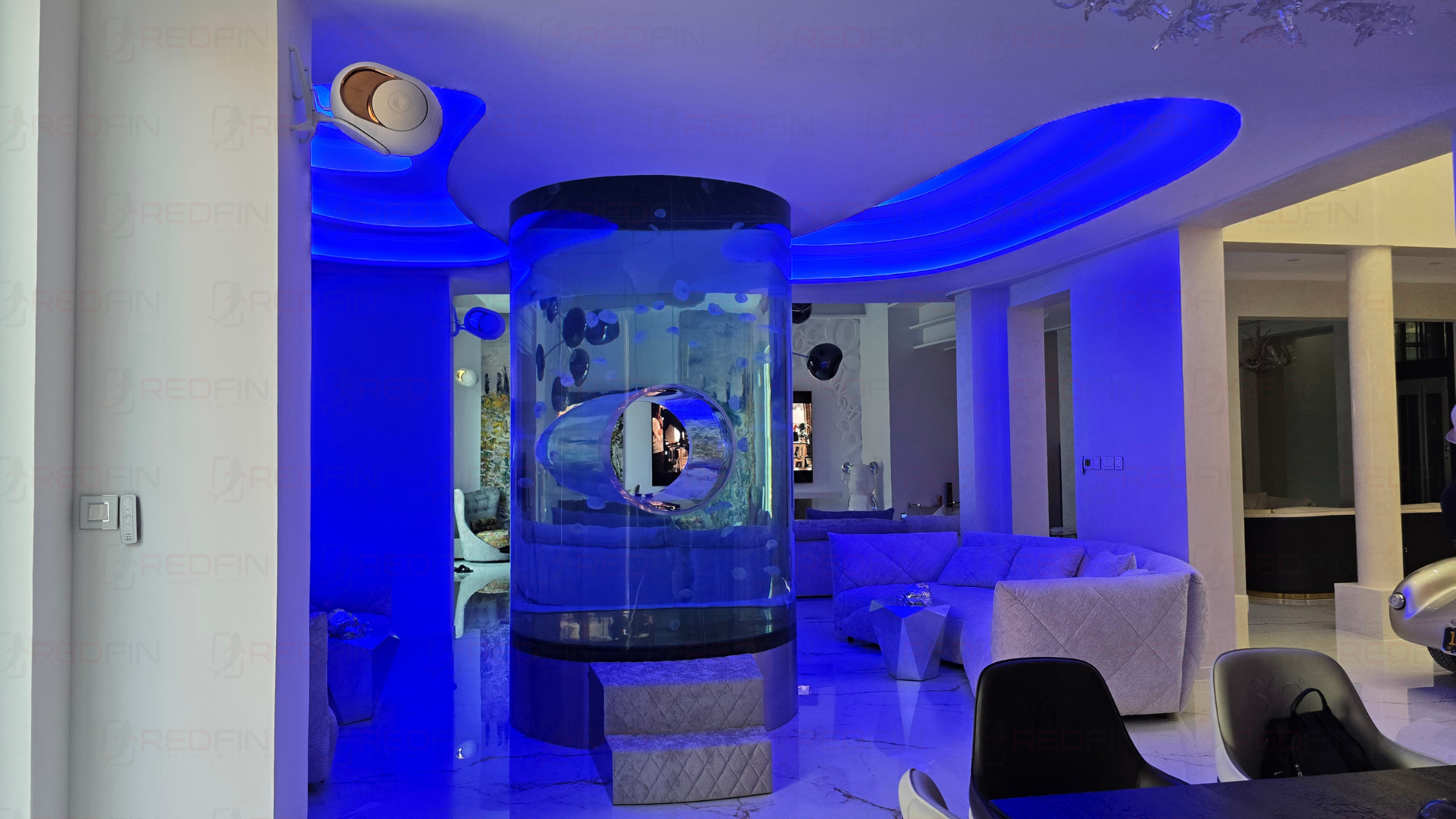
Aquariums have the unique ability to transform a space not only during the day but also after sunset. With the right lighting design, an aquarium can become an entirely different visual experience at night, creating a calming, immersive atmosphere within a home, office, or public space.
Modern lighting systems allow aquarium designers to control intensity, color spectrum, and timing with remarkable precision. These capabilities make it possible to replicate natural daylight cycles, highlight aquascaping elements, and create dramatic nighttime displays.
For luxury residential aquariums and commercial installations, nighttime lighting design is just as important as daytime illumination.
Why Aquarium Lighting Matters
Lighting in an aquarium serves two primary purposes: supporting the biological needs of the aquatic environment and enhancing the visual presentation of the display.
Many aquatic organisms depend on specific light conditions to maintain healthy biological rhythms. Coral, plants, and even certain fish species rely on stable lighting cycles that mimic natural day and night patterns.
At the same time, lighting determines how the aquarium is perceived by viewers. Proper lighting can highlight colors, textures, and movement within the tank, turning the aquarium into a living work of art. When lighting is designed thoughtfully, the aquarium can change character throughout the day.
The Role of LED Lighting in Modern Aquariums
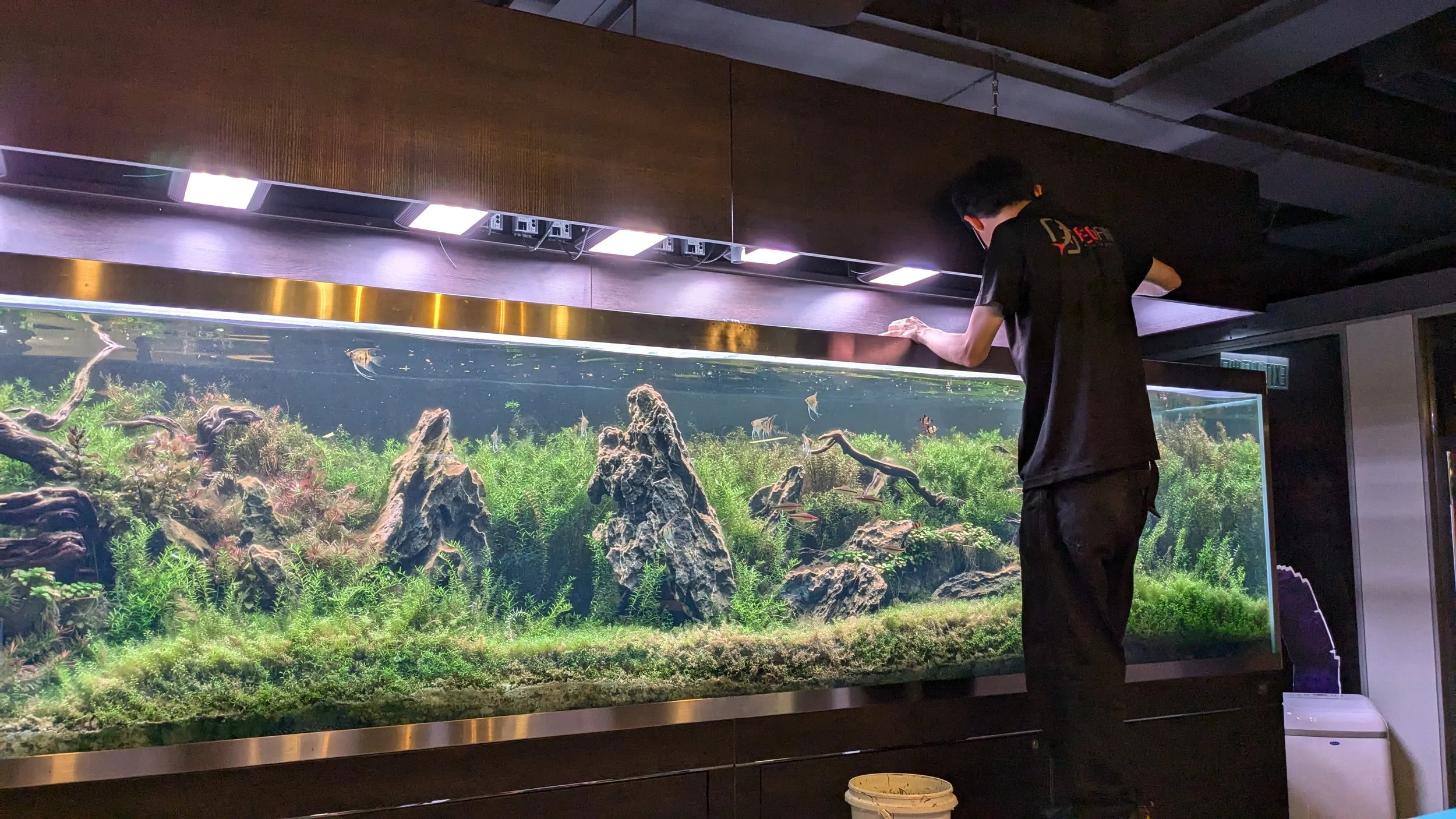
In recent years, LED lighting has become the standard technology for professional aquarium installations.
LED systems offer several advantages compared to traditional lighting methods:
precise control of light intensity
customizable color spectrum
lower energy consumption
reduced heat output
programmable day-night cycles
These features allow designers to tailor lighting conditions for both aesthetics and ecosystem stability. Programmable lighting controllers also enable smooth transitions between daytime and nighttime lighting, creating a more natural viewing experience.
Creating a Natural Day-Night Cycle
In natural aquatic environments, lighting changes gradually throughout the day as the sun rises, reaches its peak, and then sets. Aquarium lighting systems can replicate these patterns.
Typical lighting schedules include:
Morning transition with gradually increasing light intensity.
Midday peak lighting that highlights coral growth and vibrant fish colors.
Evening transition where light slowly dims to create a calm nighttime environment.
These transitions help maintain the natural biological rhythms of aquatic life while enhancing the viewing experience for observers.
Moonlight Effects in Aquariums
One of the most captivating lighting techniques used in modern aquariums is moonlight simulation. Low-intensity blue lighting can mimic the soft glow of moonlight, creating a tranquil nighttime atmosphere.
Moonlight lighting allows viewers to observe nocturnal fish species that become more active during darker hours. This lighting technique also adds depth and contrast to the aquarium, highlighting subtle movements and textures that may not be visible during brighter daylight conditions.
Highlighting Aquascaping with Lighting
Aquascaping, the arrangement of rock, coral, plants, and decorative elements can be dramatically enhanced through careful lighting placement. Strategically positioned lighting can create shadows and highlights that emphasize the three-dimensional structure of the aquarium.
For example:
Top-down lighting can enhance coral textures and reef formations.
Directional lighting can illuminate specific areas of the aquarium to create focal points.
Backlighting can add depth and visual separation between foreground and background elements.
These techniques transform the aquarium from a simple display into a dynamic visual feature within a room.
Color Spectrum and Visual Impact
Different wavelengths of light influence how colors appear within the aquarium.
Blue lighting enhances fluorescent pigments found in many coral species, creating vibrant glowing effects.
White lighting provides natural color balance and realistic illumination.
Some advanced lighting systems allow designers to blend multiple color channels to achieve the desired aesthetic effect. By adjusting the light spectrum, aquariums can display dramatically different moods and visual styles throughout the day.
Lighting for Freshwater vs Marine Aquariums
Lighting requirements differ between freshwater and marine aquariums. Freshwater aquariums typically require moderate lighting to support aquatic plants and maintain natural coloration of fish. Marine aquariums, particularly reef systems often require stronger lighting to support coral growth and photosynthesis.
Reef aquariums frequently use specialized lighting systems designed to deliver the specific wavelengths needed by coral symbiotic algae. Understanding these differences ensures that lighting systems support both the health of the ecosystem and the visual goals of the installation.
Avoiding Common Lighting Mistakes

While lighting can dramatically enhance an aquarium, poor lighting design can lead to problems. Some common mistakes include:
excessive lighting duration
incorrect light spectrum
uneven light distribution
overheating due to inefficient lighting systems
These issues can contribute to algae growth, stress in aquatic animals, and inconsistent visual appearance. Professional aquarium lighting design considers both biological requirements and visual aesthetics to achieve the best results.
Integrating Lighting with Interior Architecture
In luxury residential projects and commercial spaces, aquarium lighting must also complement the surrounding interior design. Hidden lighting fixtures, recessed LED systems, and architectural lighting integration can create a seamless visual effect where the aquarium appears to glow naturally within the space.
When lighting is carefully integrated with the room’s design, the aquarium becomes a sophisticated architectural feature rather than a standalone object.
Conclusion
Lighting is one of the most powerful tools in aquarium design. By carefully controlling light intensity, spectrum, and timing, aquariums can transform dramatically between day and night.
Modern LED systems make it possible to create natural lighting cycles, moonlight effects, and dramatic visual highlights that enhance both the health of the aquatic ecosystem and the beauty of the display.
When lighting design is approached thoughtfully, an aquarium becomes more than just a tank, it becomes a dynamic living feature that evolves throughout the day and night.
FAQ
What type of lighting is best for aquariums?
LED lighting is currently the most widely used technology for aquariums because it allows precise control of intensity, color spectrum, and timing while consuming less energy.
Do aquariums need lights at night?
Most aquariums benefit from a period of darkness to simulate natural nighttime conditions. Some systems use low-intensity moonlight lighting to create a subtle nighttime effect.
Can aquarium lighting cause algae growth?
Yes. Excessive lighting duration or intensity can contribute to algae growth if nutrient levels are high.
What is moonlight lighting in aquariums?
Moonlight lighting uses low-intensity blue LEDs to simulate the soft glow of moonlight, allowing viewers to observe nocturnal activity while maintaining a calm nighttime ambiance.
How long should aquarium lights stay on?
Lighting duration typically ranges from 8 to 12 hours per day depending on the type of aquarium and the species being kept.