


Jellyfish aquariums are among the most technically specialized systems within the aquarium industry. Unlike traditional fish aquariums, jellyfish systems require carefully engineered water circulation patterns designed specifically to support delicate jellyfish movement without causing injury.
The most commonly used system for jellyfish displays is known as a kreisel aquarium.
What Is a Kreisel Aquarium?
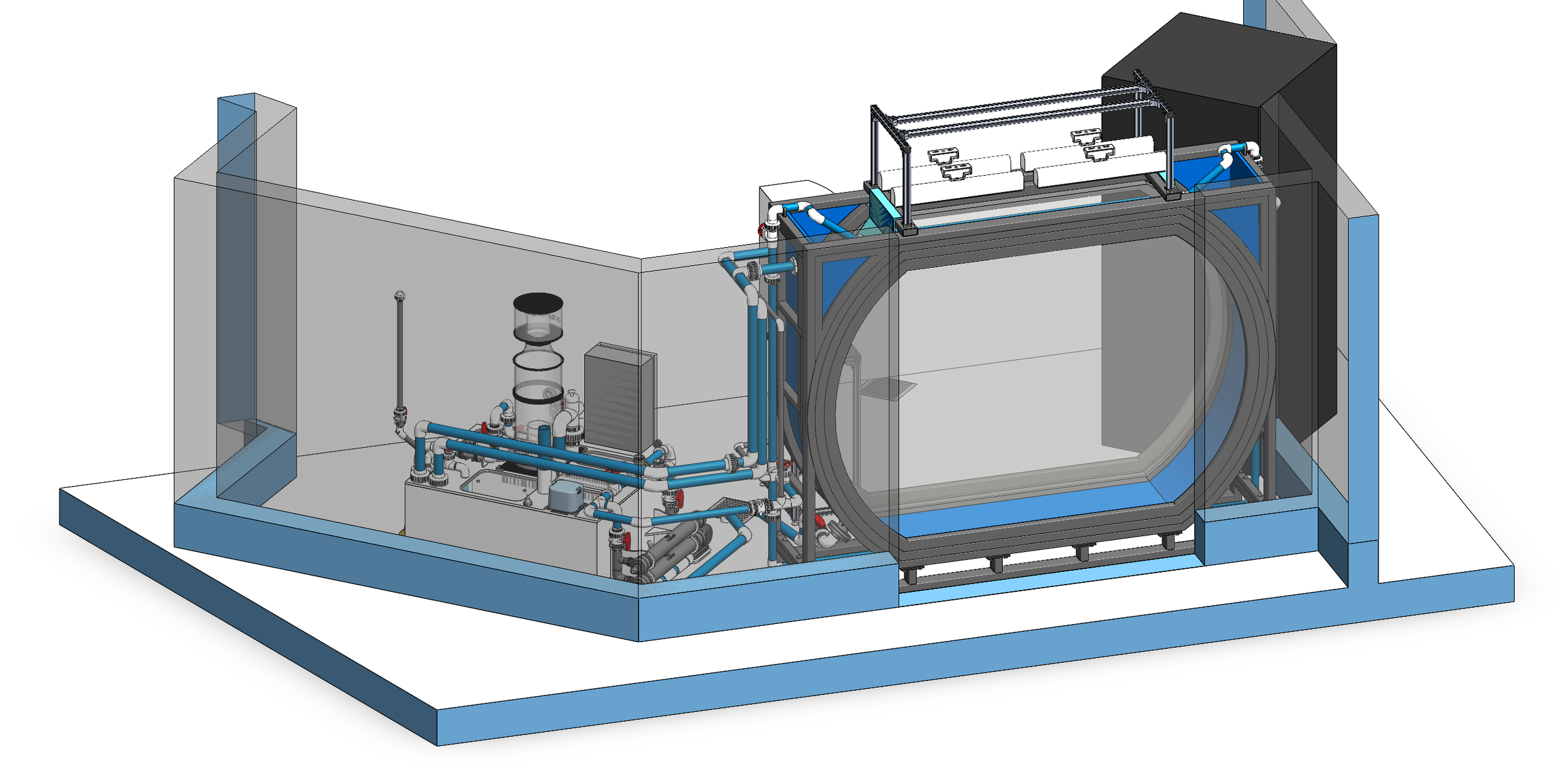
A kreisel aquarium is a specially engineered aquarium system designed to create a gentle circular water flow that keeps jellyfish suspended safely within the water column.
Traditional aquariums are unsuitable for jellyfish because sharp corners, aggressive filtration intake, and irregular water movement can damage delicate jellyfish tissue.
Kreisel systems eliminate these risks through controlled circular flow patterns.
Water Flow & Circulation
The defining feature of a kreisel aquarium is its circulation system.
The aquarium is designed to create:
Laminar circular flow
Gentle water movement
Controlled suspension within the display
Reduced turbulence
This allows jellyfish to move naturally throughout the aquarium without becoming trapped against surfaces.
Specialized Filtration
Jellyfish systems require carefully controlled filtration systems.
Common components include:
Mechanical filtration
Biological filtration
Protein skimming
UV sterilization
Temperature control systems
Water quality stability is essential for successful jellyfish husbandry.
Acrylic Construction
Most jellyfish aquariums are constructed using acrylic due to:
Optical clarity
Seamless curved forms
Smooth surfaces
Flexible shaping capabilities
Rounded acrylic interiors help maintain safe circulation patterns within the aquarium.
Lighting & Display Design
Lighting plays a major role in jellyfish exhibits.
Specialized lighting systems are commonly used to:
Enhance translucency
Highlight movement
Create immersive visual experiences
Support themed environments
This is one reason jellyfish aquariums are widely used within hospitality and public attractions.
Jellyfish in Public Attractions
Public aquariums and immersive attractions frequently use jellyfish exhibits because of their hypnotic movement and strong visual impact.
Custom kreisel systems are commonly integrated into:
Public aquarium exhibits
Hotel environments
Hospitality spaces
Luxury residences
Interactive attractions
Operational Considerations
Jellyfish systems require ongoing operational expertise.
Important considerations include:
Stable water quality
Feeding systems
Water circulation balance
Temperature management
Specialized husbandry
These systems require careful engineering and long-term operational planning.
Conclusion
Jellyfish aquariums combine specialized engineering, life support systems, acrylic fabrication, and aquatic husbandry expertise.
When properly designed, kreisel aquariums create immersive aquatic displays that showcase the natural movement and beauty of jellyfish while maintaining stable environmental conditions for long-term operation.
Frequently Asked Questions
What is a kreisel aquarium?
A kreisel aquarium is a specialized system designed to create gentle circular water movement that safely keeps jellyfish suspended within the display.
Can jellyfish live in normal aquariums?
Traditional aquariums are generally unsuitable for jellyfish because corners, aggressive flow, and filtration systems can damage delicate tissue.
Why are jellyfish aquariums usually made from acrylic?
Acrylic allows smooth curved surfaces and seamless forms that help maintain safe circulation patterns within the aquarium.
Are jellyfish aquariums difficult to maintain?
Jellyfish systems require stable water quality, controlled circulation, temperature management, and specialized operational expertise.
Where are jellyfish aquariums commonly used?
Jellyfish aquariums are commonly integrated into luxury residences, hospitality environments, public attractions, and immersive exhibits.