

Life Support Systems 101: What Keeps Large Aquariums Alive
In the world of public aquariums, commercial installations, and high-end private displays, the success of any aquatic environment hinges on one often-overlooked component: the Life Support System (LSS). At RedFin Aquarium Design, we specialize in building these intricate ecosystems, ensuring every fish, coral, and aquatic plant thrives in a carefully engineered, sustainable setting.
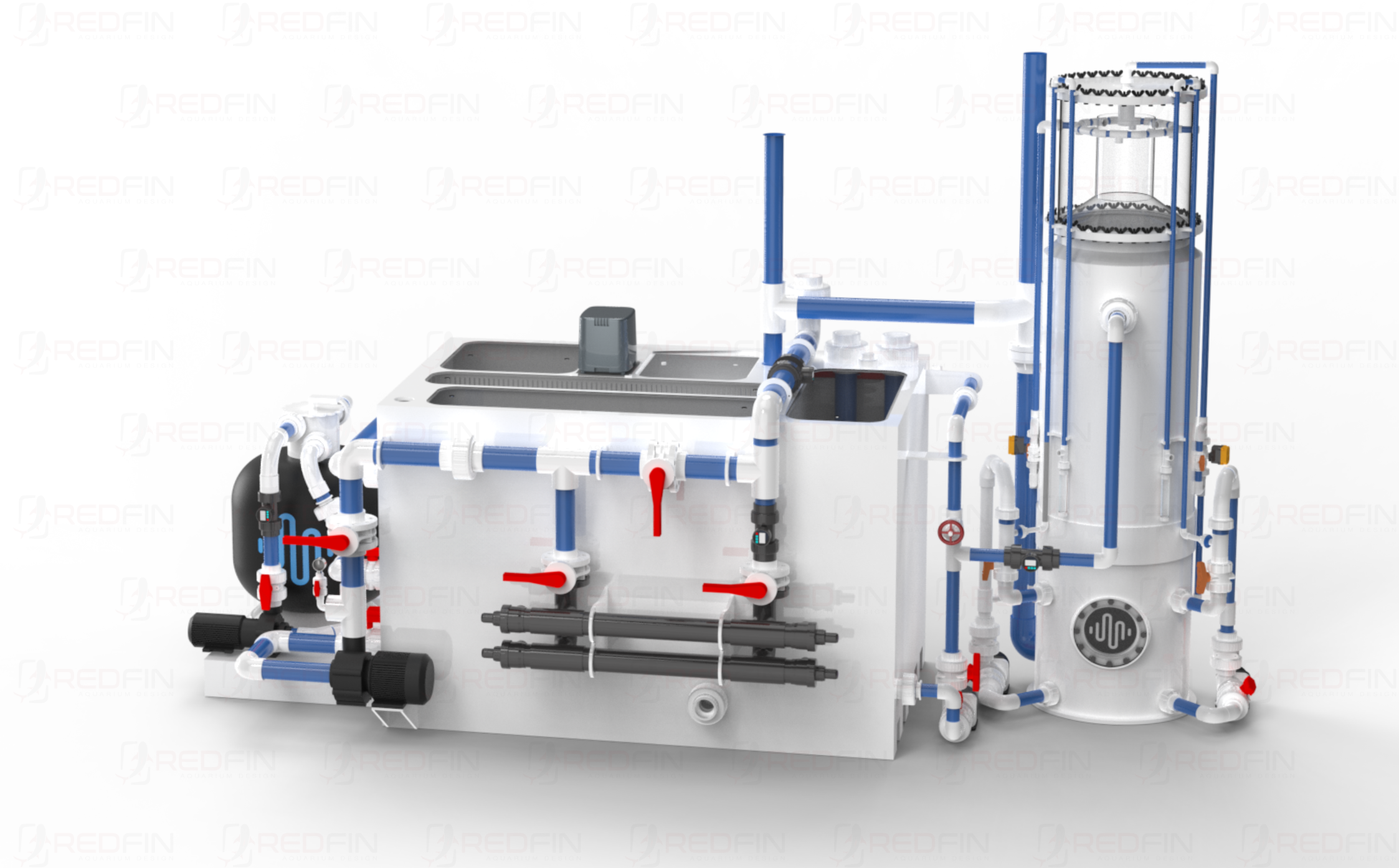
What is a Life Support System in Aquariums?
A Life Support System is the backbone of any high-performance aquarium. It is a comprehensive infrastructure designed to manage water quality, circulation, temperature, and sanitation. Whether in a 500-liter reef tank or a 500,000-liter public display, an LSS ensures biological equilibrium and stable environmental parameters.
The Core Components of a Professional LSS
1. Mechanical Filtration
Mechanical filters remove visible debris and suspended particles from the water column. These include:
Filter socks or drum filters for pre-filtration.
Sand filters for polishing water clarity.
Foam fractionators for protein removal, especially in marine systems.
2. Biological Filtration
Biological filtration is at the heart of nitrogen cycling in aquatic systems. Beneficial bacteria colonize substrates such as:
Bio-media (e.g., ceramic rings, plastic balls)
Moving bed reactors These bacteria convert harmful ammonia into nitrite, and then into relatively safe nitrate.
3. Chemical Filtration
Chemical filtration uses activated carbon or resins to remove dissolved organic compounds, discoloration, and toxins. Ozone and activated carbon work together to enhance water clarity and eliminate odors.
Water Circulation and Flow Design

Water flow is essential for gas exchange, nutrient distribution, and debris suspension. In large aquariums, flow is achieved through:
Return pumps and powerheads
Closed-loop systems to maintain velocity without visible turbulence
Wave makers to replicate tidal or reef movements
At RedFin, we carefully model flow dynamics in 3D to ensure even distribution and avoid dead zones. Each system is customized based on tank dimensions, aquascape, and livestock behavior.
Temperature Regulation
Thermal consistency is key to species health. Temperature is maintained using:
Titanium heaters and digital thermostats
Chillers for warm climates or heat-sensitive species
Redundant controls and alarms for fail-safe operation
Sterilization and Pathogen Control
To reduce the risk of disease outbreaks, LSS designs often include:
UV sterilizers for bacterial and algal control
Ozone generators for water clarity and disinfection
These systems are integrated into side loops with flow rate adjustments to maintain contact time efficiency.

Monitoring and Automation
Modern life support systems are equipped with digital monitoring tools, enabling:
Real-time readings of pH, salinity, ORP, temperature, and dissolved oxygen
Automated dosing and water top-offs
Remote control and alerts via smart systems or building management interfaces
This data-driven approach allows RedFin’s operational teams to monitor system health proactively, ensuring minimal downtime and stable living conditions.
Energy Efficiency and Sustainability
Sustainable design is a RedFin standard. Our LSS systems feature:
Low-energy pumps and variable frequency drives (VFDs)
Optimized plumbing layouts to reduce friction losses
Heat recovery systems to reduce HVAC dependency
This not only minimizes environmental impact but also reduces long-term operational costs.
Space-Saving Skid Systems
To streamline installations, RedFin offers pre-assembled skid filtration units. These compact, modular systems come pre-plumbed and pre-tested, ideal for:
Hotel aquariums
Office feature displays
Premium residences with limited mechanical space
RedFin’s Custom Approach
Every aquarium project begins with a system audit and design consultation. We factor in:
Volume and stocking density
Water type (freshwater or marine)
Display dimensions and flow requirements
Client budget and space constraints
Our multi-disciplinary team including aquarists, marine biologists, and mechanical engineers collaborates to deliver a tailor-made solution that balances beauty, function, and reliability.