

Are Jellyfish Aquariums Hard to Maintain?
There’s something mesmerizing about jellyfish; their delicate forms, rhythmic movements, and soft glow make them one of the most captivating species to display. But anyone who has admired a jellyfish aquarium has likely wondered the same thing:
Are jellyfish aquariums hard to maintain?
The short answer: they require specialized care, but with the right design and setup, maintenance can be surprisingly straightforward.
Let’s break down what makes jellyfish aquariums different, what they need to stay healthy, and how professionals simplify their upkeep.
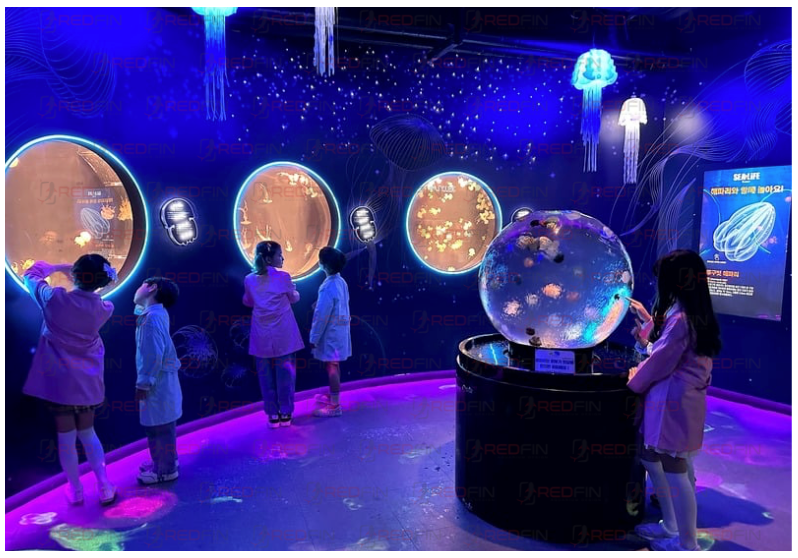
1. Why Jellyfish Require Specialized Care
Unlike fish or corals, jellyfish are entirely soft-bodied and drift rather than swim. They can’t navigate strong currents, avoid obstacles, or survive in environments with uneven flow or sharp surfaces.
Their care depends less on daily feeding routines and more on engineering precision, particularly in flow design, temperature regulation, and filtration.
Key takeaway:
A jellyfish aquarium isn’t “hard” to maintain, it’s just technically specific.
Once the system is properly designed and balanced, it becomes stable and easy to manage long term.

2. What Makes Jellyfish Aquariums Different from Regular Tanks
Jellyfish aquariums differ from standard fish tanks in several key ways. First, the tank shape: instead of rectangular or square tanks, jellyfish aquariums use circular or kreisel designs that create smooth, continuous water flow. This prevents jellyfish from getting trapped or injured in corners.
Next, water circulation is carefully controlled. Regular aquariums rely on directional or random flow, but jellyfish require laminar, circular movement to stay suspended and healthy.
Filtration systems also differ significantly. While conventional tanks may use standard pumps and aeration, jellyfish displays require bubble-free life support systems that maintain water clarity without harming the delicate animals.
Lighting is another major distinction. Jellyfish need low-heat, color-balanced LED lighting that enhances their natural luminescence without raising water temperature. Finally, jellyfish are usually kept alone in their tanks, unlike fish aquariums, which often host multiple species.
Each of these design choices is essential for keeping jellyfish healthy and reducing maintenance challenges. When all elements are implemented correctly, the tank becomes stable and easy to manage, allowing the jellyfish to thrive beautifully.
3. The Main Areas of Maintenance and How to Simplify Them
Water Quality Management
Jellyfish are sensitive to water conditions; salinity, pH, temperature, and clarity must stay consistent. However, with automated monitoring systems, these parameters can be tracked and adjusted automatically.
Pro Tip: Use digital control systems with alerts that can notifies you if any level changes reducing human error and response time.
Feeding Routine
Jellyfish feed on small planktonic foods like brine shrimp or specialized jellyfish diets. Feeding is typically done once or twice daily using controlled amounts to prevent overfeeding.
Pro Tip: Automated feeders or feeding rings can ensure consistent distribution and make feeding less time-intensive.
Lighting and Temperature Control
Maintaining cool, stable temperatures (usually around 16–20°C, depending on species) and low-heat lighting is essential. LED systems not only enhance color but also minimize evaporation and heat buildup helping stabilize conditions without constant adjustment.
Regular Cleaning
Because jellyfish tanks are free of rocks and decorations, cleaning is easier than in reef systems. The main focus is wiping down viewing panels and performing partial water changes typically 10–20% every two weeks.
Professional systems are designed with maintenance access points that simplify cleaning and filter replacement.
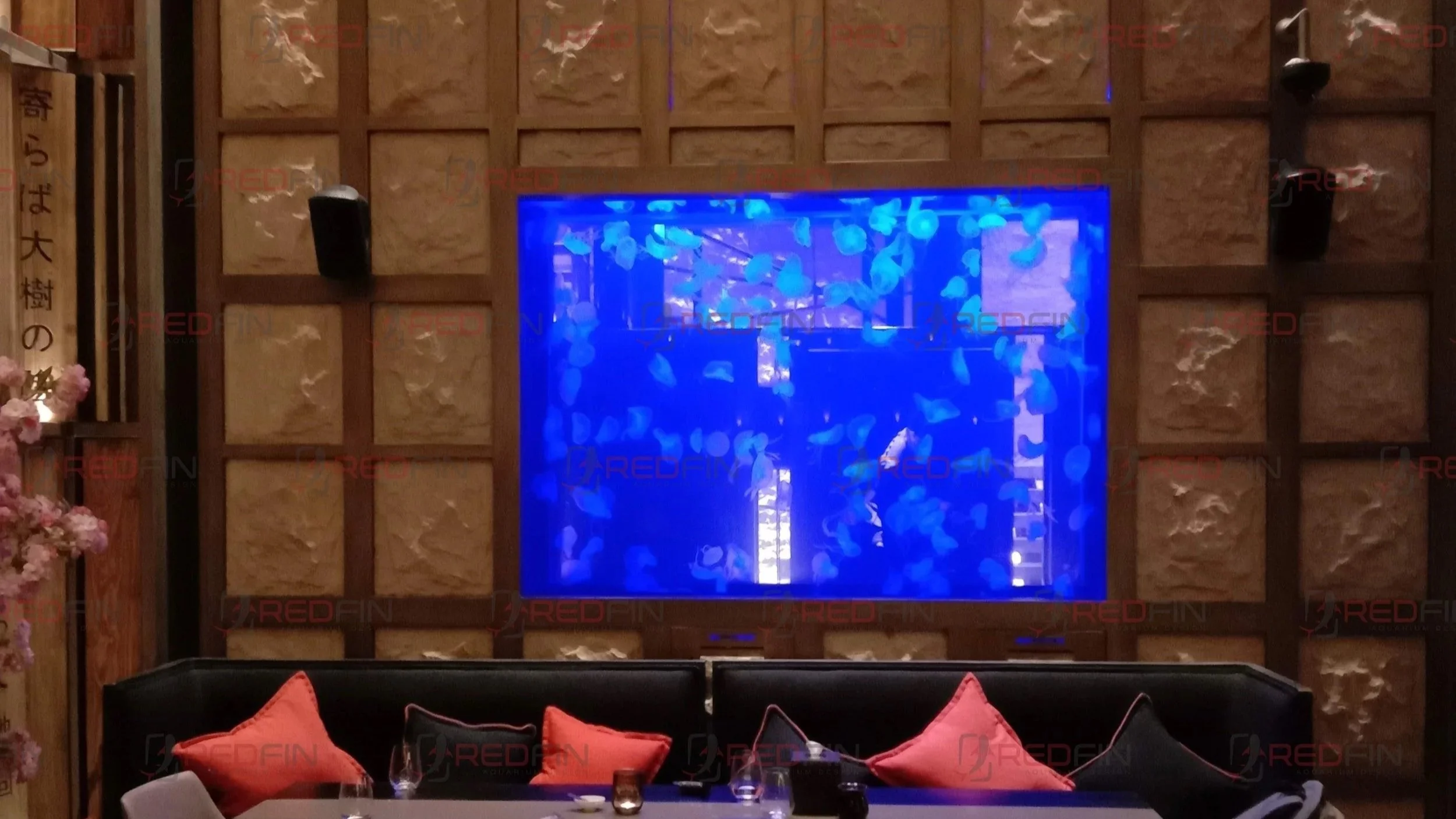
4. Common Mistakes That Make Maintenance Harder
Beginners sometimes struggle not because jellyfish are fragile but because the tank wasn’t designed correctly from the start. Here are some mistakes that complicate maintenance unnecessarily:
Using standard aquariums instead of circular systems
Allowing bubbles into the tank (which can harm jellyfish)
Overfeeding or using the wrong food size
Skipping flow calibration during setup
Not using automatic monitoring or temperature control
Each of these issues can turn a smooth-running system into a constant chore. That’s why design precision is the real secret to easy jellyfish maintenance.
5. How Professionals Simplify Jellyfish Care
Professional aquarium designers approach jellyfish tanks with the same engineering discipline used in public aquariums. At RedFin Aquarium Design, the process focuses on making complex systems run effortlessly for the client.
Professional Maintenance Simplifications:
Pre-tested laminar flow dynamics for even water movement
Bubble-free filtration with separate life support chambers
Integrated digital monitoring and dosing control
Modular maintenance access panels
Energy-efficient components for stable, low-cost operation
By combining technology, hydrodynamic design, and operational foresight, professionals make even the most delicate displays manageable for long-term operation.
So, Are Jellyfish Aquariums Hard to Maintain?
They’re not difficult, they’re specialized.
A jellyfish system requires a tailored setup and thoughtful engineering, but once those foundations are in place, the daily and weekly upkeep is surprisingly light.
With proper design, routine care becomes predictable, safe, and rewarding allowing owners to simply enjoy the beauty of their display without constant worry.

Jellyfish aquariums represent the perfect balance of art, science, and engineering.
When designed by professionals who understand the species’ biology and flow dynamics, maintaining one is not just feasible, it’s sustainable.
At RedFin Aquarium Design, our goal is to make advanced aquatic systems feel effortless, creating displays that are as functional as they are beautiful.