

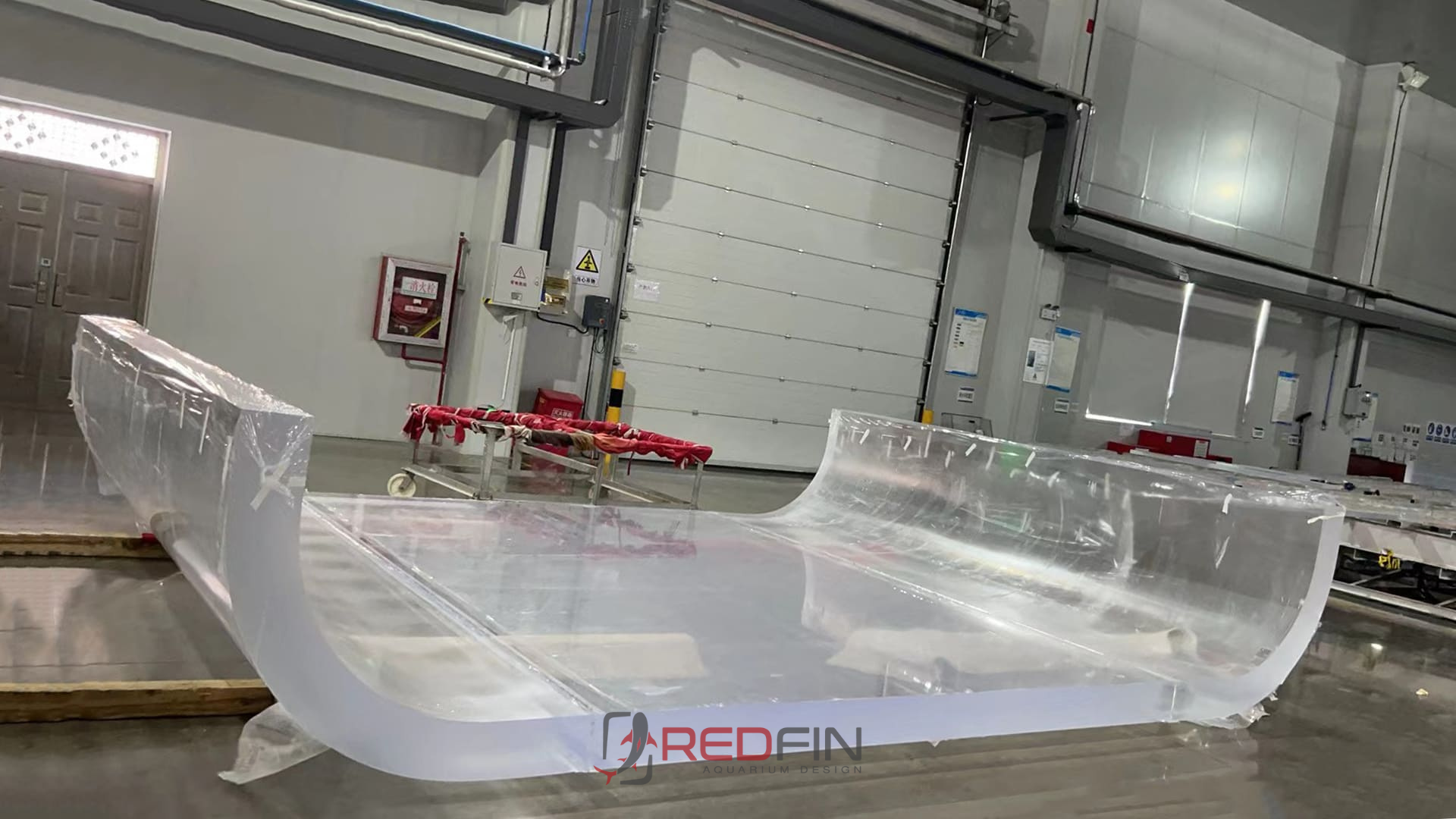
Large custom aquariums require careful material selection during the design and engineering process. While both acrylic and glass are used within the aquarium industry, large residential, commercial, and public aquarium installations are most commonly constructed using acrylic.
The reason is not simply aesthetics. Acrylic offers significant structural, optical, and engineering advantages for large-scale aquarium construction.
Optical Clarity
One of acrylic’s biggest advantages is its superior optical clarity.
Acrylic provides:
Reduced green tint
Clearer viewing experience
Better light transmission
Improved underwater visibility
This becomes especially important in large viewing panels, panoramic displays, and public aquarium exhibits.
Strength & Impact Resistance
Acrylic is significantly stronger and more impact resistant than glass.
This allows acrylic aquariums to safely support:
Higher water pressure
Larger viewing panels
Taller aquariums
Cylindrical installations
Tunnel systems
Large public aquarium exhibits would often be impossible to achieve using glass alone.
Flexibility & Curved Panels
Unlike glass, acrylic can be thermoformed into curved and complex shapes.
This allows:
Cylindrical aquariums
Curved viewing panels
Acrylic tunnels
Panoramic windows
Seamless sculptural forms
These capabilities make acrylic the preferred material for public attractions and luxury feature aquariums.
Seamless Viewing
Large acrylic panels can be chemically bonded to create nearly seamless viewing surfaces.
Glass installations often require visible joins and framing systems, especially at larger scales.
This is one of the reasons public aquariums and luxury installations prefer acrylic.
Weight Considerations
Acrylic is lighter than glass, reducing:
Structural loading
Transportation challenges
Installation complexity
However, large acrylic panels still require specialized engineering and lifting operations.
Challenges of Acrylic
Despite its advantages, acrylic also presents challenges.
These include:
Surface scratching
Specialized polishing requirements
Complex fabrication processes
Transportation logistics
Precision engineering requirements
Large acrylic fabrication requires significant technical expertise.
Why Public Aquariums Use Acrylic
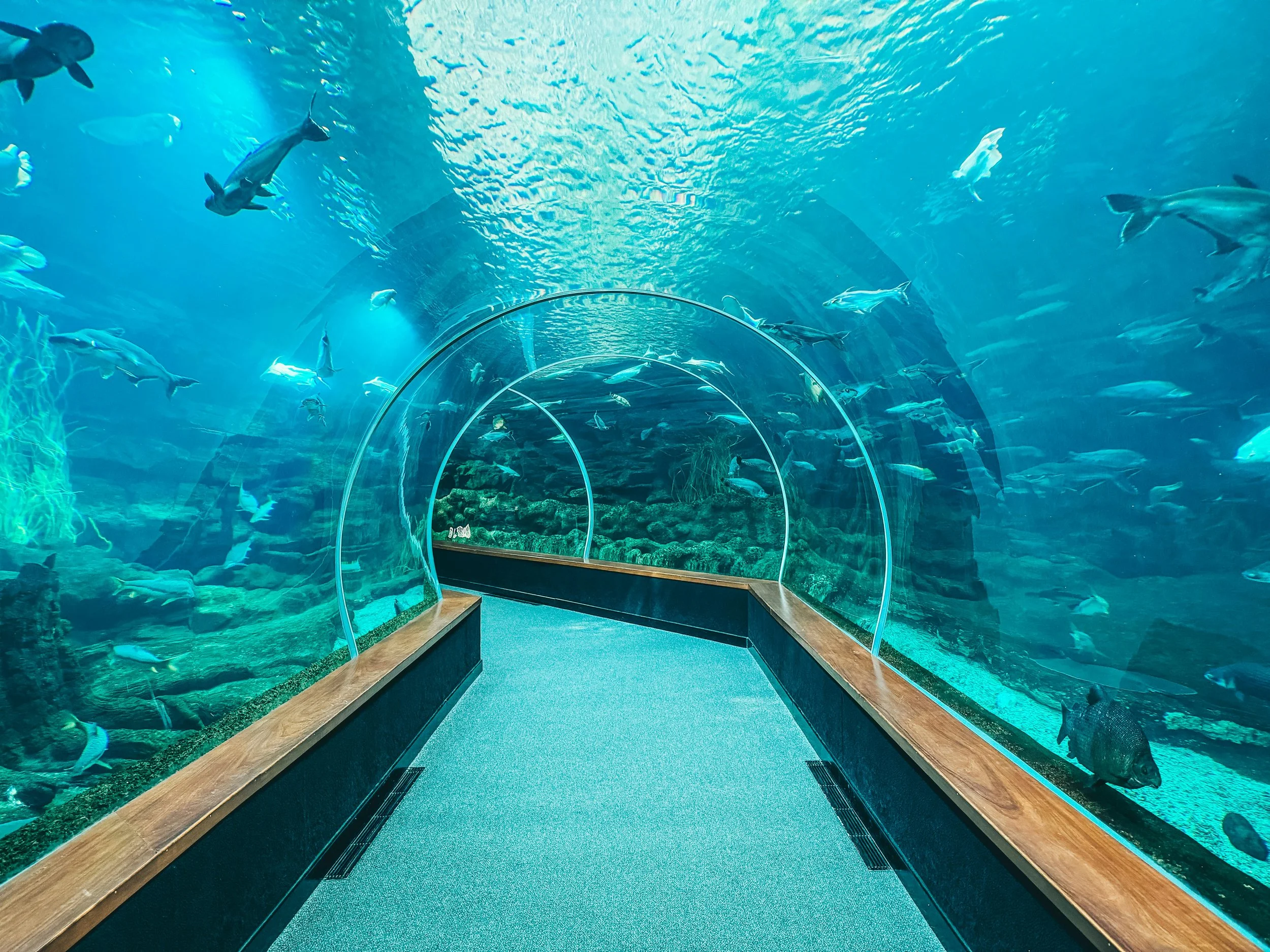
Public aquariums commonly use acrylic because it enables:
Massive viewing panels
Curved exhibits
Cylinders
Tunnels
High structural performance
Improved guest viewing experience
Many iconic public aquarium installations around the world rely entirely on acrylic engineering.
Conclusion
For large custom aquarium installations, acrylic is generally the preferred material due to its strength, flexibility, optical clarity, and ability to accommodate large seamless viewing environments.
From luxury residential aquariums to public attractions and hospitality installations, acrylic allows designers and engineers to create immersive aquatic environments that would be difficult or impossible using glass alone.
Frequently Asked Questions
Is acrylic better than glass for large aquariums?
For large installations, acrylic is often preferred due to its strength, flexibility, and ability to support seamless panoramic viewing.
Why do public aquariums use acrylic?
Public aquariums commonly use acrylic because it allows for tunnels, cylinders, curved panels, and large viewing windows with high structural performance.
Does acrylic scratch easily?
Acrylic is more prone to scratching than glass, but it can also be polished and restored more easily when maintained correctly.
Can acrylic be curved?
Yes. Acrylic can be thermoformed into curved and cylindrical shapes, making it ideal for complex aquarium designs.
Is acrylic clearer than glass?
Yes. Acrylic generally provides better optical clarity and reduced tinting compared to standard glass.