

The Physics of Water Pressure in Deep Aquariums
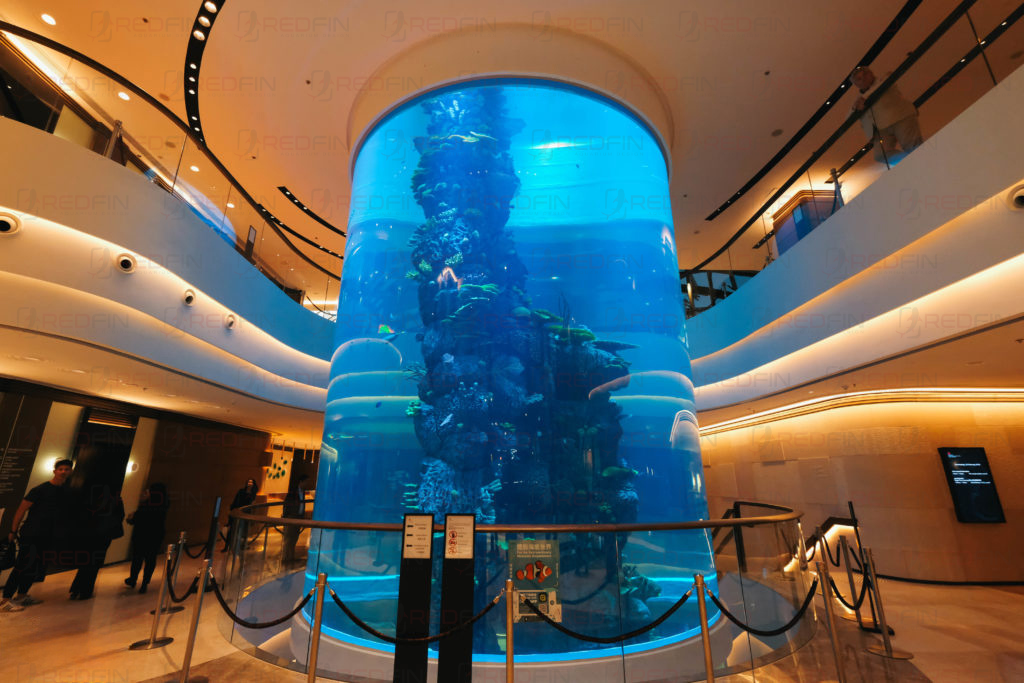
Designing deep aquariums is one of the most complex challenges in aquarium engineering. As aquariums increase in height, the forces acting on the structure grow significantly due to the weight and pressure of the water.
Understanding how water pressure behaves inside a large aquarium is essential for ensuring structural safety, maintaining long-term durability, and protecting the aquatic life within the system.
At RedFin Aquarium Design, the engineering of large and deep aquariums involves careful calculations, specialized materials, and structural design strategies that ensure the system remains stable under immense hydrostatic pressure.
Understanding Hydrostatic Pressure
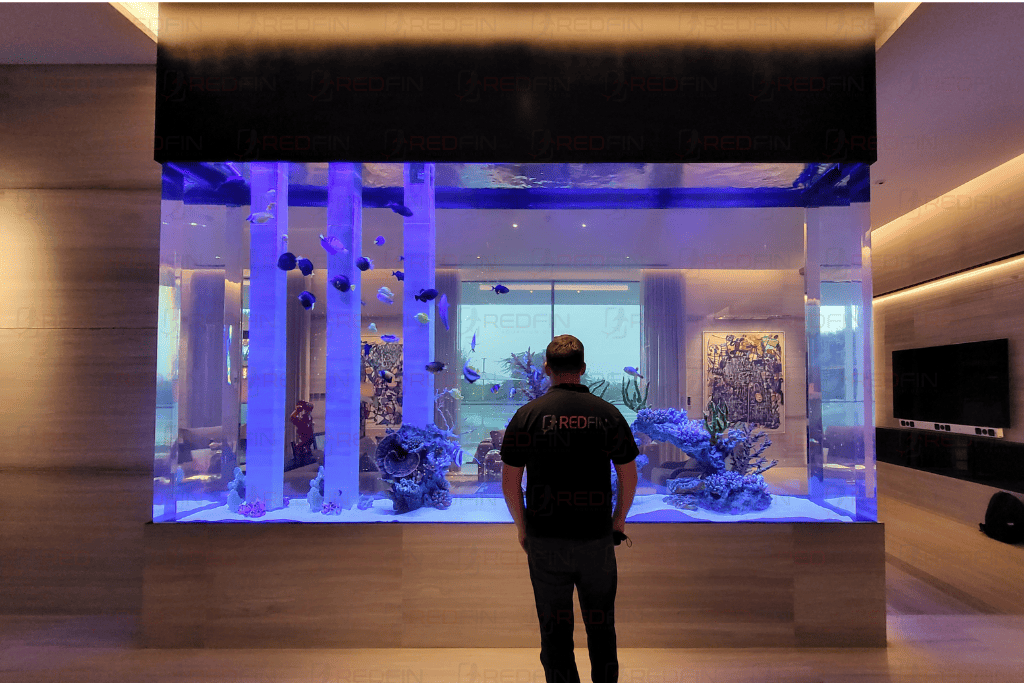
Water pressure in an aquarium is known as hydrostatic pressure. This pressure increases with depth because the weight of the water above pushes downward.
The deeper the aquarium, the greater the force exerted on the walls and viewing panels.
At the surface of the aquarium, pressure is relatively low. However, as depth increases, the pressure rises steadily. This means that the bottom section of a tall aquarium experiences significantly more force than the upper portion. For example, in a deep aquarium, the pressure at the base can be several times greater than at the top.
This increasing pressure is the primary reason why aquarium panels must be thicker and structurally reinforced as tank height increases.
Why Aquarium Height Matters More Than Volume
One of the most common misconceptions is that large aquariums are difficult to engineer simply because of the total volume of water they contain. In reality, height is the most critical factor.
A wide but shallow aquarium may hold thousands of liters of water but experience relatively moderate pressure. A tall aquarium, even with less total volume, can exert significantly higher forces on its panels. This is why very tall aquariums require careful engineering and stronger materials.
Pressure Distribution in Deep Aquariums
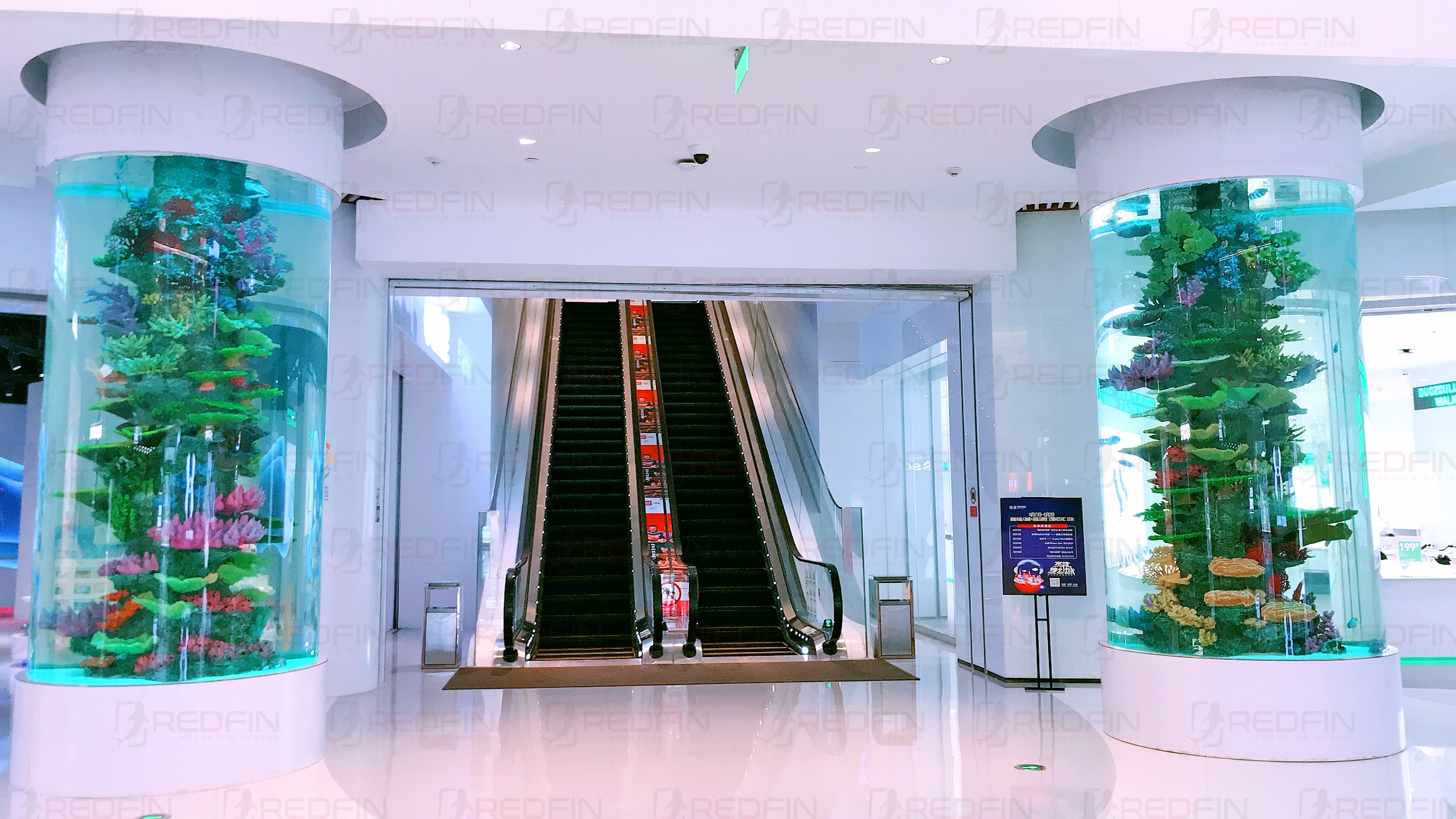
Water pressure is not evenly distributed across the walls of an aquarium.
Instead, it follows a triangular pressure pattern:
Minimal pressure at the water surface
Increasing pressure with depth
Maximum pressure at the base of the tank
Because of this pressure distribution, the lower sections of the aquarium panels must withstand the greatest force. Engineers often design aquariums with thicker materials or structural reinforcement near the base to handle these loads.
Acrylic vs Glass in Deep Aquariums
Material selection plays a major role in the structural integrity of large aquariums.
Glass Aquariums
Glass has been used in aquariums for decades and offers excellent scratch resistance and optical clarity. However, glass is relatively rigid and less flexible under pressure. In very large or deep aquariums, this rigidity can increase the risk of structural failure if the material is not thick enough.
Acrylic Aquariums
Acrylic is often preferred for large-scale aquariums because it is significantly stronger and more flexible than glass.
Key advantages include:
Higher impact resistance
Greater strength-to-weight ratio
Ability to form curved or cylindrical shapes
Reduced risk of catastrophic cracking
Because of these properties, acrylic is commonly used in tall aquariums, public aquarium viewing panels, and cylindrical displays.
Structural Reinforcement in Large Aquariums
To handle the immense pressure of deep water columns, large aquariums often incorporate additional structural elements. These may include:
Reinforced Frames
Steel or reinforced structural frames help support the aquarium walls and distribute pressure loads across the structure.
Thick Viewing Panels
The thickness of acrylic or glass panels increases as aquarium height increases. Large public aquariums often use panels that are many centimeters thick to ensure safety.
Structural Bonding
Advanced bonding techniques are used to join panels together securely. In acrylic aquariums, panels are often chemically bonded to create extremely strong joints.
Engineering Cylindrical and Curved Aquariums
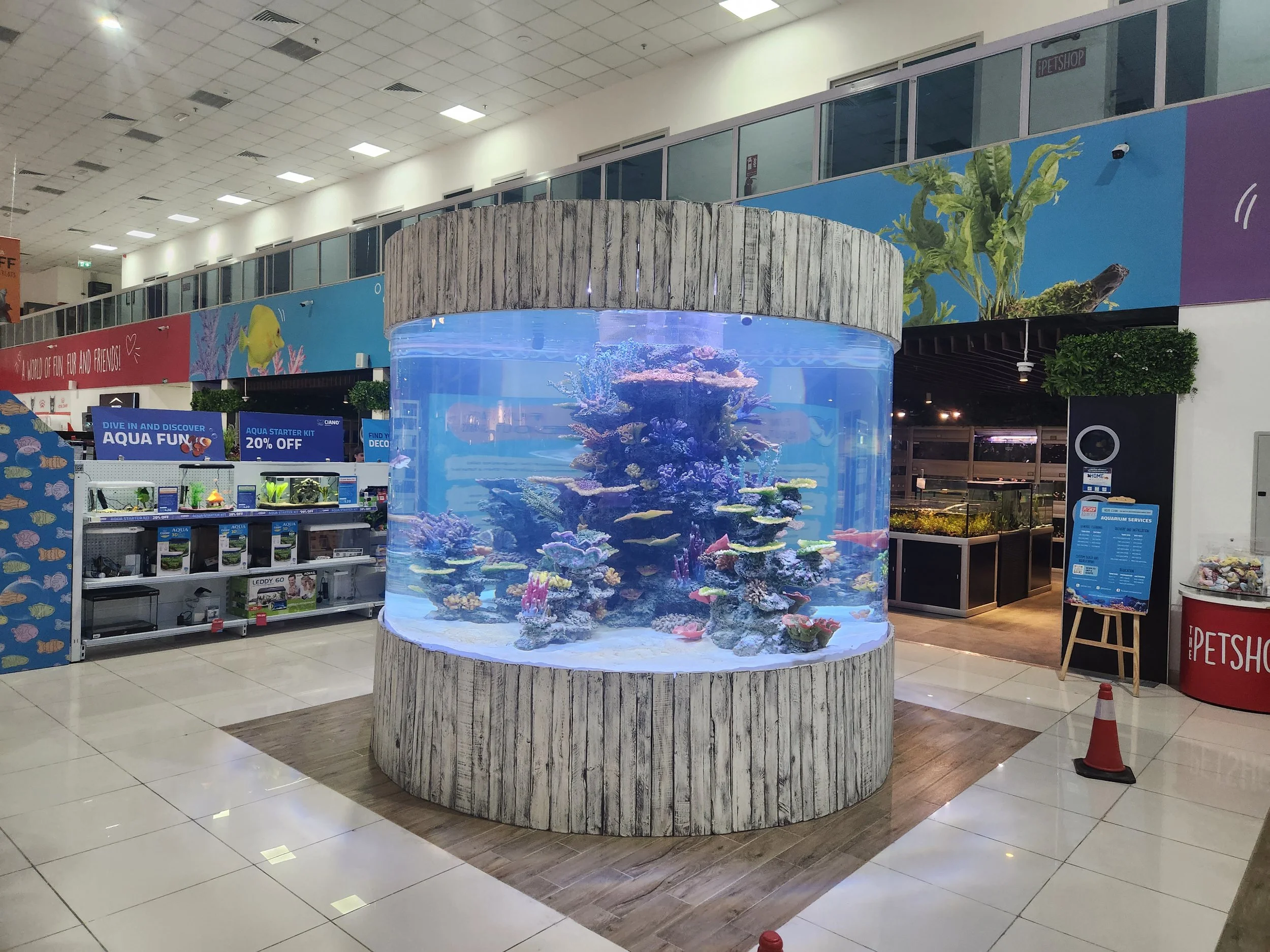
Cylindrical aquariums distribute water pressure differently compared to flat-panel tanks. Because of their curved shape, cylindrical aquariums naturally distribute forces more evenly around the structure. This can reduce stress points that occur in rectangular tanks. However, they also present unique engineering challenges, including:
Specialized manufacturing techniques
Complex installation processes
Custom structural support systems
Despite these challenges, cylindrical aquariums are popular in commercial spaces because of their striking visual impact.
Safety Factors in Aquarium Engineering
Professional aquarium engineers incorporate safety factors when designing large systems.A safety factor ensures that the aquarium structure can withstand forces significantly greater than the expected operating conditions.
For example, if calculations predict a certain pressure load, the aquarium may be designed to withstand several times that amount to provide an additional margin of safety. This approach protects both the structure and the people viewing the aquarium.
The Importance of Professional Design
Large aquariums require a combination of engineering expertise, material science knowledge, and aquarium system design. Several factors must be carefully evaluated during the design phase:
Tank dimensions
Material selection
Structural support
Viewing panel thickness
Life support system integration
Maintenance accessibility
Professional aquarium designers work closely with engineers and architects to ensure that every component of the aquarium system is built to handle the forces involved.
Conclusion
The physics of water pressure plays a critical role in the design of deep aquariums. As aquarium height increases, hydrostatic pressure rises dramatically, placing significant forces on the tank walls and viewing panels.
Through careful engineering, appropriate material selection, and structural reinforcement, large aquariums can safely contain enormous volumes of water while maintaining clear and immersive viewing experiences.
Understanding these principles allows designers and engineers to create aquariums that are not only visually impressive but also structurally sound and reliable for long-term operation.
FAQ
How does water pressure increase in deep aquariums?
Water pressure increases with depth because the weight of the water above pushes downward. The deeper the aquarium, the greater the pressure on the tank walls.
Why are tall aquariums harder to build?
Tall aquariums experience higher hydrostatic pressure at the base, which requires thicker materials, stronger structural support, and careful engineering to ensure safety.
Is acrylic stronger than glass for aquariums?
Acrylic is generally stronger and more impact-resistant than glass, making it the preferred material for very large or tall aquariums.
How thick are panels in large aquariums?
Panel thickness varies depending on the size and depth of the aquarium. Large public aquariums often use panels that are several centimeters thick to withstand the pressure of the water.
Are cylindrical aquariums stronger than rectangular ones?
Cylindrical aquariums distribute pressure more evenly due to their curved shape, which can reduce stress points compared to flat-panel tanks.