

How to Optimize Water Flow for Maximum Clarity and Fish Health
Aquarium water flow is one of the most important and often misunderstood aspects of aquarium design. Whether in a luxury residential display, a public aquarium exhibit, or a large commercial installation, proper water circulation plays a critical role in maintaining water clarity, ensuring fish health, and supporting the overall stability of the ecosystem.
At RedFin Aquarium Design, water movement is treated as a core engineering element of every project. A well-designed circulation system not only improves the visual quality of an aquarium but also helps distribute oxygen, nutrients, and filtration more effectively throughout the entire system.
Understanding how water flow works and how to optimize it is essential for any successful aquarium installation.
Why Water Flow Matters in Aquarium Systems
In natural aquatic environments such as oceans, rivers, and lakes, water is constantly moving. Currents distribute oxygen, remove waste, and transport nutrients across ecosystems.
Aquariums must replicate this natural movement.
Without proper circulation, several problems can occur:
Poor oxygen distribution
Accumulation of debris and organic waste
Increased algae growth
Dead zones where water becomes stagnant
Stress or poor health in fish and coral
A well-designed flow system ensures that water continuously moves through the aquarium and filtration systems, keeping the environment stable and healthy.
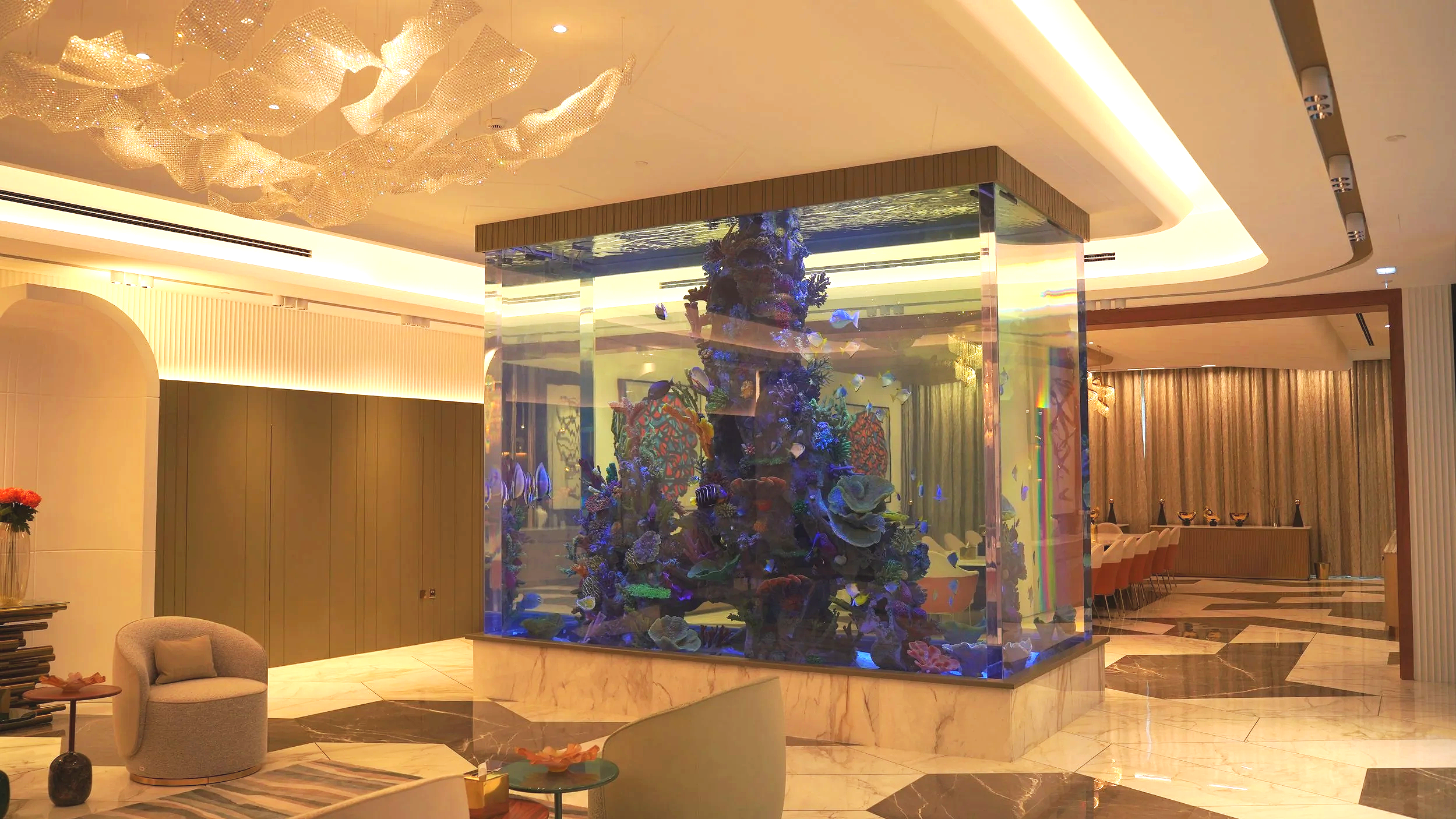
The Relationship Between Water Flow and Water Clarity
Water clarity is often the first thing people notice when viewing an aquarium. Crystal-clear water enhances the visual impact of the display and allows livestock and aquascaping to be seen in their full detail.
Proper circulation improves clarity in several ways.
First, water flow keeps particulate matter suspended long enough for filtration systems to remove it. Without adequate movement, debris settles in corners or on substrate surfaces.
Second, consistent circulation ensures that mechanical filtration, protein skimmers, and biological filtration systems operate efficiently.
Third, flow prevents localized nutrient buildup, which can lead to algae growth and cloudy water conditions.
In large aquariums, especially those exceeding several thousand liters, water flow becomes even more important because stagnant zones can develop in areas far from pump outlets.
Understanding Turnover Rate
One of the key measurements in aquarium flow design is turnover rate.
Turnover rate refers to how many times the total volume of water in an aquarium passes through the filtration system within an hour.
For example: A 10,000-liter aquarium with a filtration system circulating 50,000 liters per hour has a 5x turnover rate.
Typical guidelines include:
Freshwater aquariums: 4–6x turnover per hour
Saltwater aquariums: 6–10x turnover per hour
Reef aquariums: 10–20x turnover per hour
However, these numbers can vary depending on livestock, aquascaping, and system design. Large custom aquariums often require carefully engineered circulation patterns rather than simply increasing pump power.
Eliminating Dead Zones in Aquariums
Dead zones are areas within the aquarium where water movement is minimal or nonexistent. These zones can develop behind rock structures, inside aquascaping features, or in corners of large tanks.
Dead zones can cause several problems:
Waste accumulation
Reduced oxygen levels
Increased algae growth
Localized nutrient spikes
To prevent this, designers must strategically place circulation pumps, return outlets, and flow generators to ensure water reaches every part of the aquarium. In complex aquascapes or tall cylindrical aquariums, computational modeling or flow testing may be used to visualize how water moves within the system.
Designing Flow Patterns for Different Aquarium Shapes
Aquarium geometry plays a major role in determining how water circulates within the system.
Rectangular Aquariums
Rectangular tanks are the most common format and generally allow for straightforward circulation design. Water is typically directed along the length of the tank, creating a consistent current that pushes debris toward filtration intakes.
Cylindrical Aquariums
Cylindrical aquariums require a different approach. Instead of directional flow, circular tanks often use rotational water movement to keep debris suspended and evenly distribute circulation. This type of design is frequently used in jellyfish aquariums and large public displays.
Freeform or Curved Aquariums
Custom-shaped aquariums present unique challenges. Curved surfaces and irregular geometry can create unpredictable flow patterns, making pump placement and outlet positioning critical. Proper flow modeling helps ensure water reaches all areas of the tank.
Flow Requirements for Different Livestock
Different aquatic species have evolved in environments with varying levels of water movement. Understanding these requirements is essential when designing circulation systems.
Reef Species
Coral reefs experience strong ocean currents. Many corals rely on water flow to deliver nutrients and remove waste from their surfaces. Reef aquariums typically require higher turnover rates and dynamic flow patterns.
Pelagic Fish
Open-water species such as tuna or jacks thrive in environments with strong currents and require large swimming areas with consistent water movement.
Calm-Water Species
Certain freshwater fish prefer gentle currents, particularly species that originate from lakes or slow-moving rivers. Designing the correct flow intensity ensures that livestock remain comfortable and healthy.

Equipment Used to Create Aquarium Water Flow
Modern aquarium systems use a combination of specialized equipment to achieve proper circulation.
Return Pumps: Return pumps move water from the filtration system back into the display aquarium. They form the backbone of most circulation systems.
Wave Makers: Wave makers generate oscillating currents that simulate natural ocean movement, particularly useful in reef aquariums.
Powerheads: Powerheads are compact pumps placed inside the aquarium to improve localized circulation and eliminate stagnant areas.
Closed Loop Systems: Closed loop circulation systems move water through external plumbing and return it directly to the tank without passing through filtration. These systems are commonly used in large installations where strong, evenly distributed flow is required.
Flow Optimization in Large Public Aquariums
Large aquariums require highly engineered circulation systems. These systems must balance several competing priorities:
Water clarity
Livestock comfort
Energy efficiency
Maintenance accessibility
Advanced life support systems often integrate multiple pumps, flow manifolds, and directional outlets to create consistent circulation throughout the display. Engineers must carefully calculate pump capacity, plumbing resistance, and water velocity to maintain optimal flow conditions.
The Role of Professional Aquarium Design
Achieving proper water flow is not simply about installing powerful pumps. It requires a holistic approach that considers tank geometry, filtration design, livestock requirements, and long-term maintenance.
Professional aquarium designers integrate these elements into a coordinated system that ensures stable, healthy environments for aquatic life.
When done correctly, circulation systems become almost invisible to viewers while playing a critical role behind the scenes.
Conclusion
Water flow is the foundation of every successful aquarium ecosystem. From maintaining water clarity to supporting fish health and preventing algae growth, circulation systems are a fundamental part of aquarium engineering.
By carefully designing flow patterns, selecting the right equipment, and accounting for the unique geometry of each tank, aquariums can replicate the dynamic movement found in natural aquatic environments.
For large-scale or custom installations, professional design and engineering expertise are essential to ensure that water circulation works seamlessly with filtration and life support systems.
FAQ
What is the ideal water flow for an aquarium?
The ideal flow depends on the type of aquarium and the species inside it. Freshwater aquariums typically require 4–6 times water turnover per hour, while reef aquariums may require 10–20 times turnover.
Why is water circulation important in aquariums?
Water circulation distributes oxygen, removes waste, transports nutrients, and allows filtration systems to operate effectively. Without proper flow, stagnant areas can develop and harm fish health.
Can too much water flow harm fish?
Yes. Some species prefer calmer water conditions. Excessive flow can stress fish that originate from slow-moving environments. Aquarium designers must balance circulation intensity with livestock requirements.
What causes dead zones in aquariums?
Dead zones occur when water movement is blocked by rock structures, decorations, or poor pump placement. These areas can accumulate waste and lead to algae growth if not addressed.
How do large aquariums manage water flow?
Large aquariums use engineered life support systems that combine return pumps, circulation pumps, and specialized plumbing to create consistent water movement throughout the entire system.