

What Is a Paludarium? Design, Plants, and Ecosystem Guide
Aquariums traditionally showcase underwater environments filled with fish, aquatic plants, and coral. However, a fascinating evolution of aquarium design is gaining popularity among aquarists, designers, and nature enthusiasts: the paludarium.
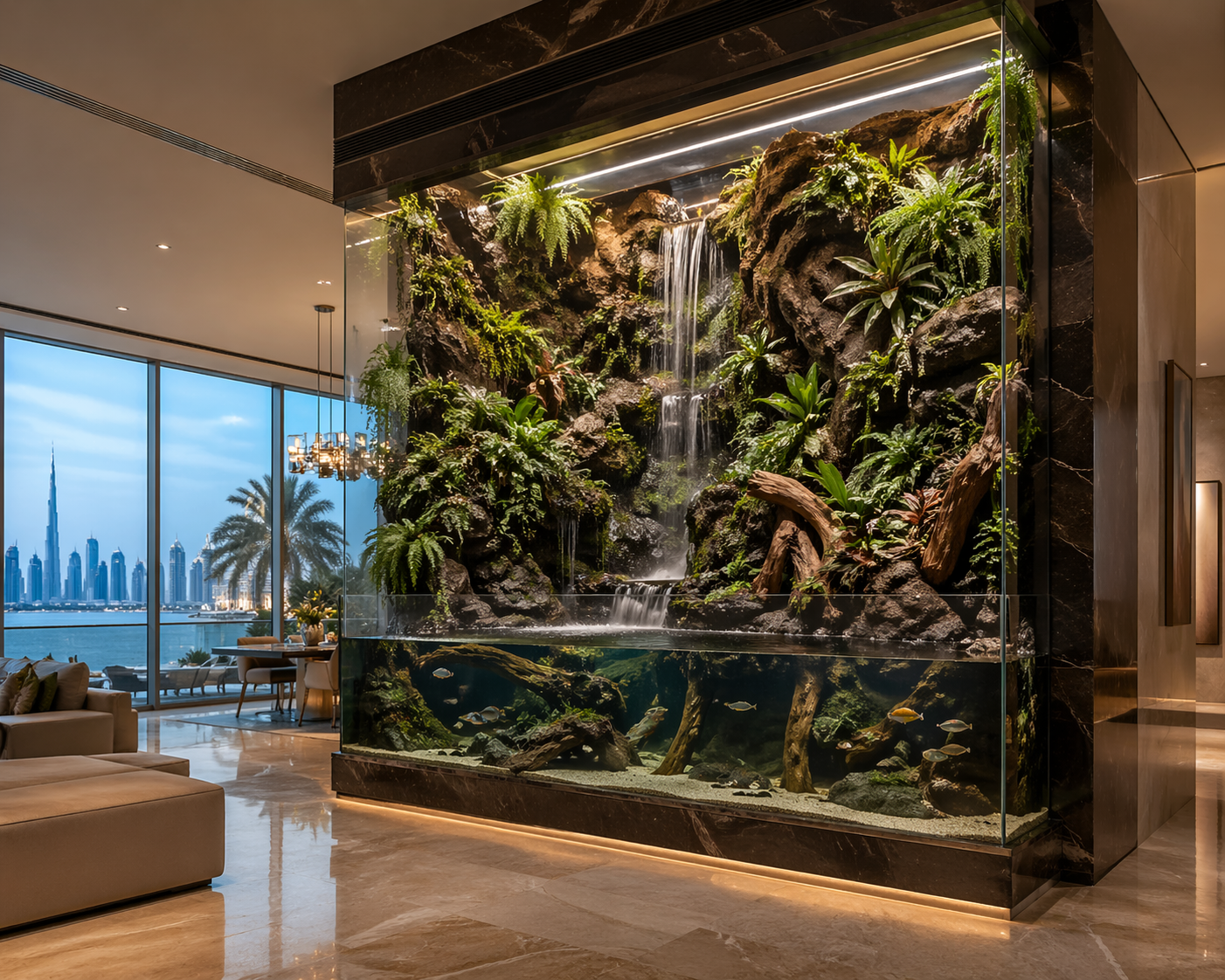
A paludarium is a unique ecosystem that combines aquatic and terrestrial environments within a single display. These installations recreate the natural transition zones where land and water meet, such as riverbanks, wetlands, mangroves, and tropical rainforest streams.
By blending water, plants, and land structures, paludariums create dynamic living landscapes that go beyond traditional aquarium design. When built correctly, they function as miniature ecosystems where aquatic life and terrestrial vegetation coexist in a balanced environment.
What Is a Paludarium?
The word paludarium comes from the Latin term palus, meaning swamp or marsh. A paludarium is designed to replicate ecosystems where water and land interact closely.
Unlike a standard aquarium, which is fully submerged, a paludarium includes multiple zones:
a submerged aquatic environment
a partially submerged shoreline or transition area
an above-water planted or terrestrial section
These layers recreate the complex habitats found in nature where rivers, forests, and wetlands intersect. This combination allows paludariums to support a broader range of plants and animals than traditional aquariums.
Key Elements of a Paludarium Design
Designing a successful paludarium requires careful planning to ensure both aquatic and terrestrial components thrive together. Several key elements must work in harmony.
Aquatic Environment
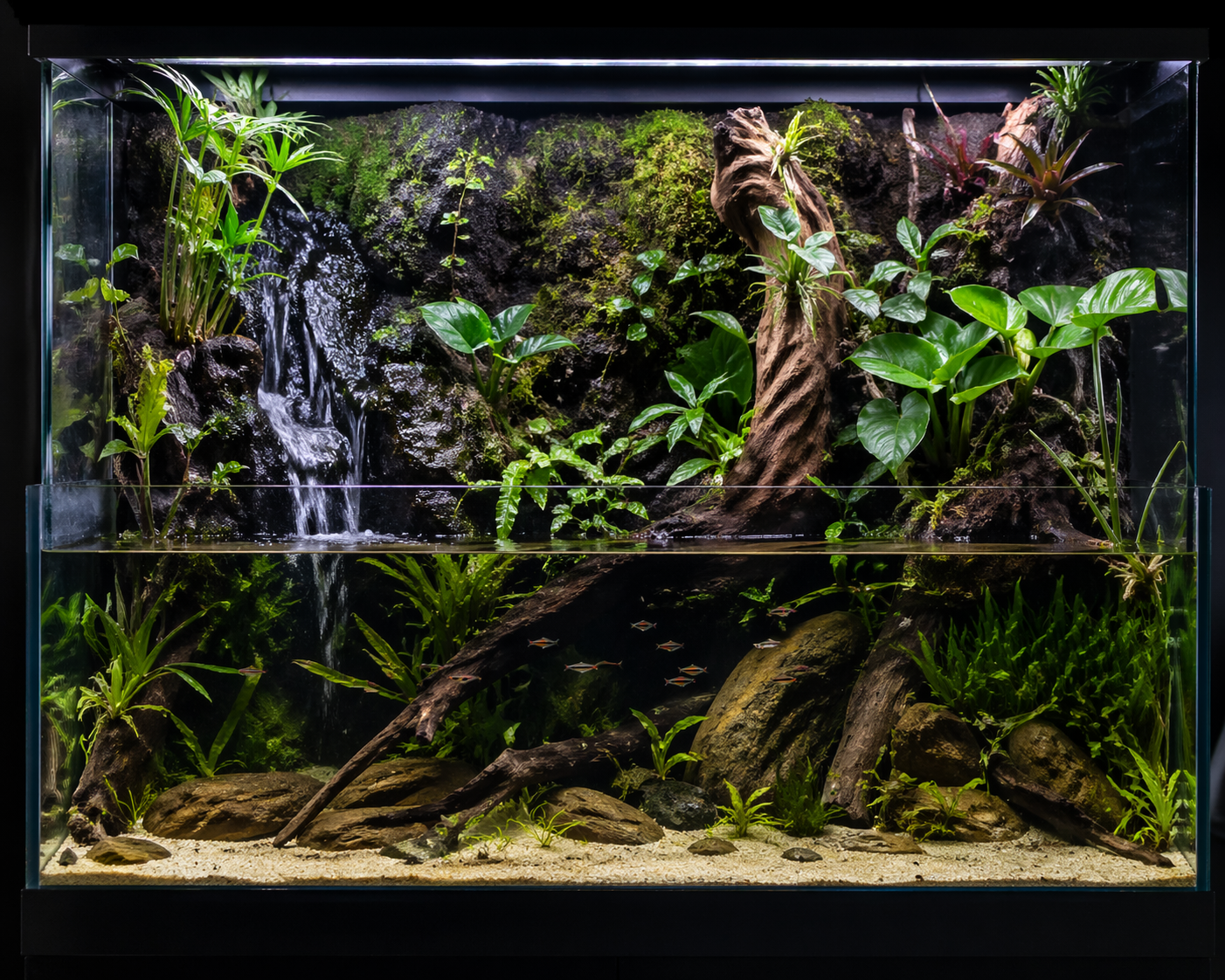
The lower section of a paludarium functions similarly to a traditional aquarium. This area contains water, aquatic plants, and fish or invertebrates.
Typical inhabitants of the aquatic section include:
small freshwater fish
shrimp species
snails
aquatic plants
Filtration and water circulation are essential in this section to maintain water clarity and stable conditions.
Terrestrial Zone
Above the waterline, the paludarium transitions into a land-based environment where plants grow in high humidity conditions.This section often features:
moss-covered surfaces
tropical foliage
exposed roots or driftwood
rocks and natural substrates
The terrestrial zone adds visual depth and creates a lush, natural landscape that extends beyond the water surface.
Hardscape Structure
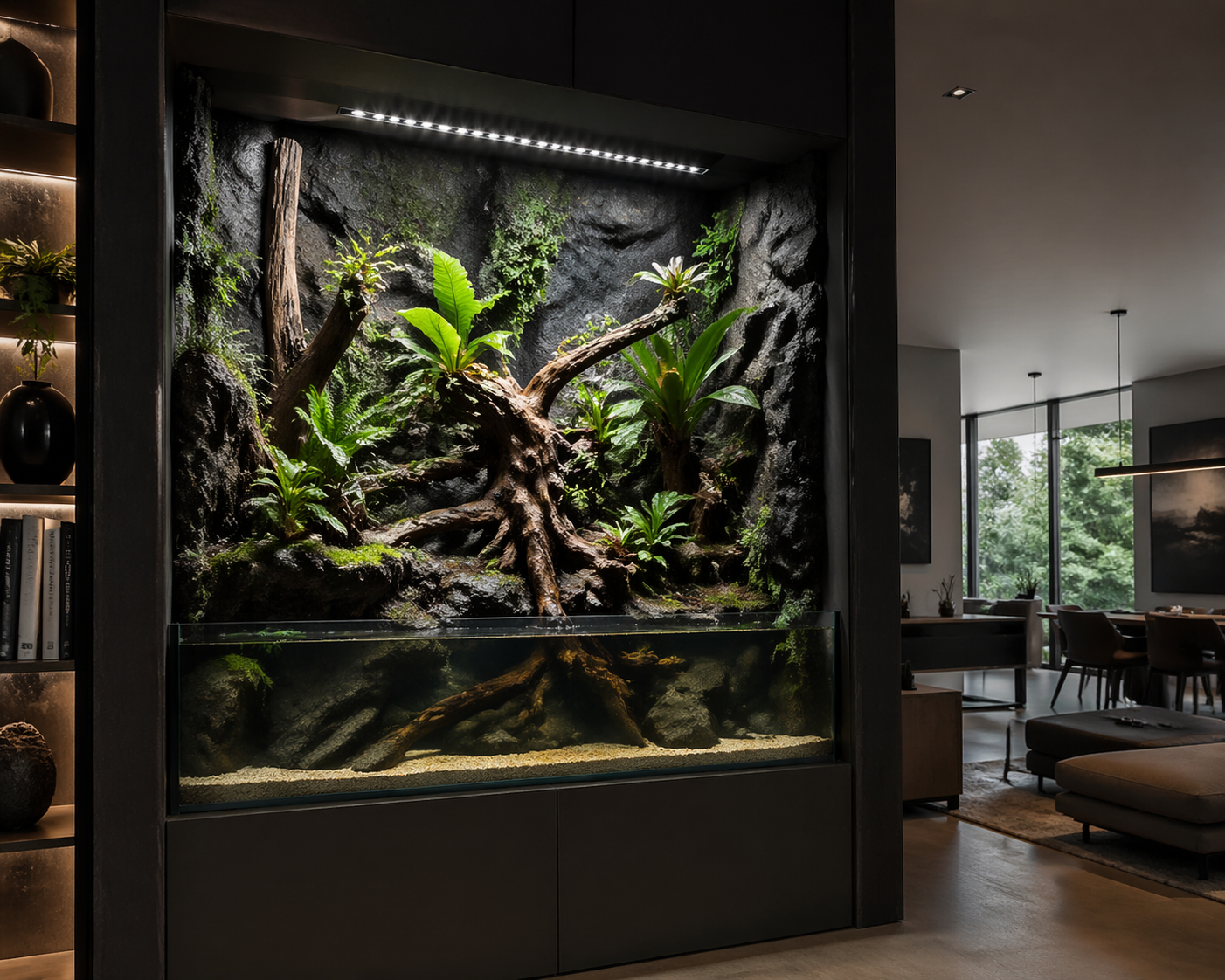
Hardscape refers to the structural materials used to build the landscape within the paludarium. These elements provide both visual structure and surfaces for plant growth.
Common hardscape materials include:
natural driftwood
stone formations
cork bark
artificial backgrounds or sculpted structures
Well-designed hardscape creates a natural transition between aquatic and terrestrial environments.
Water Flow and Filtration
Maintaining water quality is essential for the long-term success of a paludarium. Water circulation helps distribute oxygen, remove waste, and prevent stagnant areas where debris can accumulate.
Many paludariums incorporate small waterfalls or flowing streams that mimic natural environments. These features improve water circulation while enhancing the aesthetic and auditory experience of the display. Proper filtration ensures that the aquatic ecosystem remains stable and healthy.
Plants Commonly Used in Paludariums
Plants are one of the defining features of a paludarium. Because these environments are humid and partially aquatic, plant species must be able to tolerate moisture and occasional water exposure.
Popular paludarium plants include:
ferns
mosses
anubias
philodendron
bromeliads
orchids
creeping vines
Over time, plant growth softens the hardscape and transforms the display into a lush natural habitat.
Lighting and Environmental Conditions
Lighting plays an essential role in supporting both aquatic plants and terrestrial vegetation. Modern LED lighting systems provide the necessary spectrum and intensity for plant growth while highlighting the visual beauty of the paludarium.
Humidity control is also important because exposed plants require a moist environment to thrive. Some advanced systems incorporate automated misting devices that simulate rainfall and maintain optimal humidity levels.
Animals That Can Live in Paludariums
Depending on the design, paludariums can house a diverse range of animals.
Possible inhabitants include:
small freshwater fish
shrimp and snails
amphibians such as frogs
certain reptiles like small geckos
Because these systems contain both land and water environments, they can support species that require access to both habitats. Careful planning is necessary to ensure species compatibility and appropriate environmental conditions.
Challenges in Paludarium Design
Although paludariums are visually impressive, they require careful design to maintain balance between their aquatic and terrestrial components.
Common challenges include:
maintaining stable humidity levels
preventing water stagnation
controlling plant overgrowth
ensuring access for maintenance
When these factors are properly addressed, paludariums can remain stable ecosystems for many years.
Paludariums in Modern Design
Paludariums are increasingly being used in architectural and interior design projects. Their combination of water, plants, and natural materials aligns with biophilic design principles, which aim to reconnect people with nature within built environments.
Paludariums can be integrated into:
hotel lobby installations
office spaces
restaurants and lounges
educational exhibits
private residential interiors
These installations create immersive environments that bring elements of nature indoors.
Conclusion
Paludariums represent a unique fusion of aquarium design and living landscape architecture. By combining aquatic environments with lush plant growth above the waterline, they recreate the natural ecosystems found along riverbanks and wetlands.
When carefully designed, paludariums offer both ecological balance and striking visual impact. Their ability to support diverse life forms and replicate natural habitats makes them one of the most fascinating developments in modern aquarium design.
As interest in biophilic environments and natural interior features continues to grow, paludariums are likely to become an increasingly popular element in both residential and commercial spaces.
FAQ
What is the difference between an aquarium and a paludarium?
An aquarium contains only water and aquatic life, while a paludarium combines aquatic and terrestrial environments within one system.
Are paludariums difficult to maintain?
Paludariums require careful management of water quality, humidity, and plant growth, but with proper design and maintenance they can remain stable ecosystems.
What animals can live in a paludarium?
Paludariums can support fish, shrimp, amphibians, and certain reptiles depending on the habitat created.
Do paludariums require special lighting?
Yes. Lighting systems must support plant growth both underwater and above the waterline.
Can paludariums be used in interior design?
Yes. Paludariums are increasingly used as biophilic design elements in hotels, offices, restaurants, and residential spaces.